
NEWS
Brussels Closed the EES Pause as Kiosks Keep Failing
The EU’s six-hour EES pause expired on 6 September, locking first-time biometric checks on UK travellers with an official app live in only two countries.

The European Union’s six-hour pause on biometric border checks expired on 6 September, leaving Schengen states with no legal off-switch for Entry/Exit System queues. Nine interior ministers had asked Brussels to keep that pause. The Commission did not extend it.
The fight is no longer about July holiday peaks. It is about every remaining first-time enrolment, and every later check, now running with kiosks that still fail and an official app that works in two countries.
The EES Pause Ended on 6 September
EES records the passport, fingerprints and face of non-EU short-stay travellers, including UK citizens, when they enter or leave the 29 countries that run the system. EU nationals, and citizens of Iceland, Liechtenstein, Norway and Switzerland, are not put in it. The system went live in stages from 12 October 2025 and has been fully on at external Schengen crossings since 10 April 2026.
By 27 July the Commission said the system had registered over 145 million entries and exits. That figure is why airlines sound less panicked about a second summer crush and more worried about the crossings that still need a first scan. First enrolment is slow. Repeat checks are faster, until a kiosk dies and the line becomes a booth line again.
THE EES NUMBERS
- The cut-off: The legal pause on biometric collection expired on 6 September 2026.
- The traffic: The Commission counted over 145 million entries and exits by 27 July 2026.
- The map: EES runs in 29 countries, the Schengen set minus national exceptions for Cyprus and Ireland.
- The old valve: A congested crossing could halt biometric collection for up to six hours.
Uku Särekanno, then speaking for Frontex, had already said there was no plan to ease the rules again after September. The date landed on a Sunday. On Monday, Ryanair asked for the pause back until April 2027.
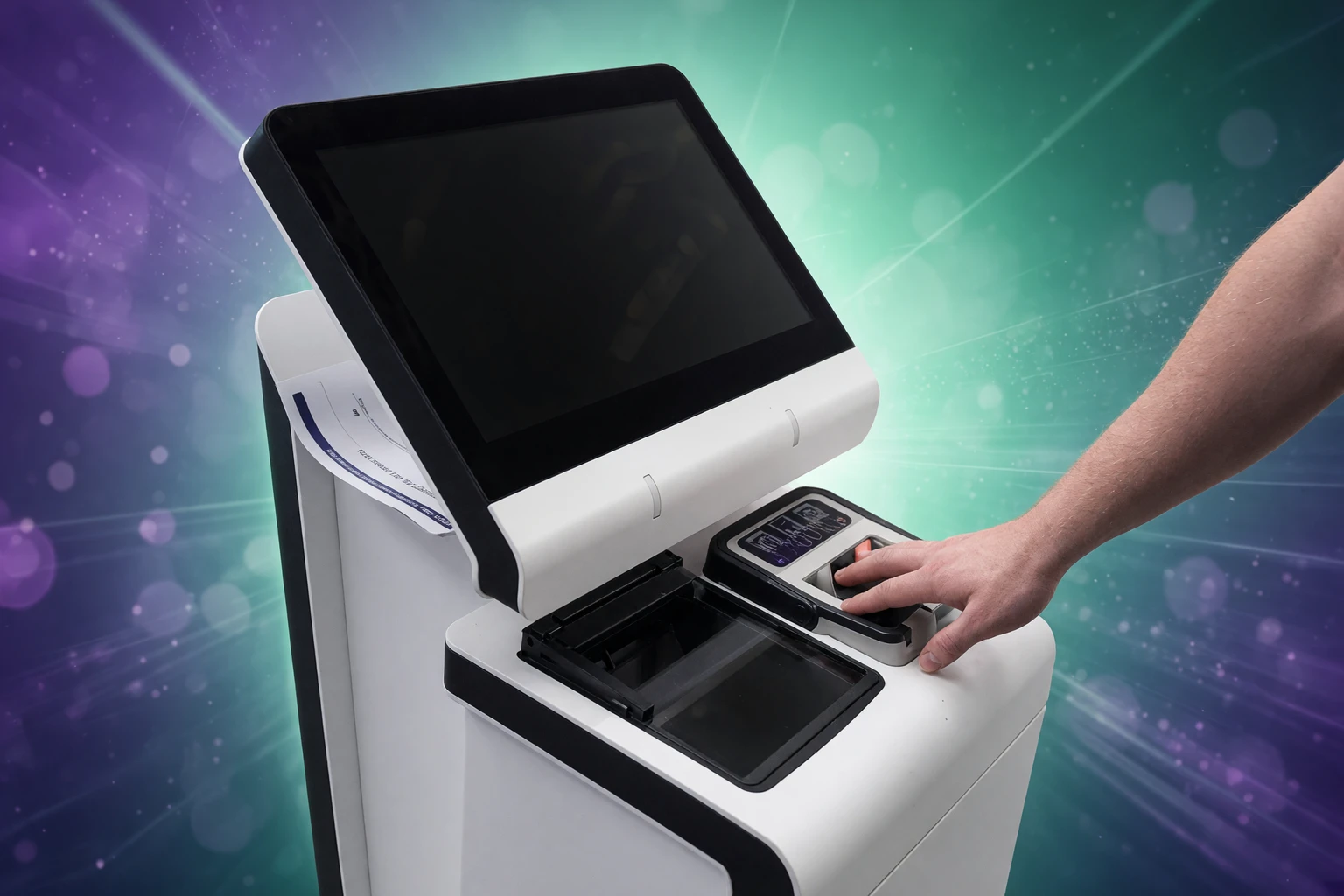
How Long a Border Could Switch EES Off
The pause was never a free pass to stamp passports all summer. Under the 2025 EES rules, a crossing facing excessive waits could use a partial suspension for up to six hours, dropping fingerprints and facial scans while still logging the traveller. Blanket nationality waivers were out. The Commission told Greece that in May, after Athens floated a British-only skip.
That is why the 6 September cut-off bites even in a quieter month. A six-hour dump valve is how a broken bank of kiosks gets cleared. Without it, a failed unit is just a longer booth queue, and the officer still has to take the biometrics.
THE ROLLOUT CLOCK
- 12 October 2025: EES enters operation under a 180-day progressive start of operations, with stamps still used in parallel.
- 10 April 2026: Full operations at external Schengen crossings. Passport stamping for these travellers ends.
- 11 and 12 April 2026: Portugal switches off biometric collection on departures at Lisbon, Porto and Faro after waits climb on day one.
- Early May 2026: Greece suspends EES registration for British visitors, then rows back to temporary high-traffic pauses rather than a nationality exemption.
- 7 July 2026: Nine interior ministers write to Internal Affairs Commissioner Magnus Brunner asking to keep the emergency mechanism past 6 September.
- 6 September 2026: The flexibility expires. Portuguese airports return to full biometric collection.
- 7 September 2026: Ryanair’s chief operating officer calls the rollout a shambles and asks for the derogation until April 2027.
Commission language stayed steady through that calendar. The system, spokespeople said, was functioning normally at most crossings, with extra help for a few points that still needed adjustment. Markus Lammert, a Commission spokesman, welcomed the nine countries’ “explicit commitment” to full implementation and to registering every non-EU traveller.
Lisbon, Faro and the Airports That Leaned on It
The summer record is why the industry wanted the valve left on. Airports Council International Europe told members’ wait times at border control had gone from two hours in a 9 April survey to 3.5 hours by late May, then to five hours at July peaks. Those delays hit arrivals and departures, ACI Europe said, even while states made wide use of partial EES suspensions.
Portugal was the clearest case. Lisbon, Porto and Faro had already turned the scanners off on 11 and 12 April. Extra border officers were later sent to those airports and to Madeira. Prime Minister Luís Montenegro talked about suspending the system in critical hours so the economy was not punished. On 6 September, Portuguese posts went back to full biometric collection for eligible non-EU travellers.
Greece used the same toolkit in the spring, first as a British-visitor skip, then as a high-traffic pause after Brussels objected. France was one of the nine governments that asked to keep the mechanism. It is still unclear, because Brussels never published a log, which airports switched EES off, on which days, and for how many of those six-hour windows.
SUMMER WAIT TIMES AT THE BORDER
| Who measured it | Peak wait | When |
|---|---|---|
| ACI Europe member survey | 2 hours | 9 April 2026 |
| ACI Europe member survey | 3.5 hours | Late May 2026 |
| ACI Europe peak times | 5 hours | July 2026 |
| Ryanair (Krakow, Lisbon, Milan, Rome) | 2 to 3 hours | Summer 2026 |
Those rows are not the same event. ACI Europe was reading its members’ worst hours. Ryanair was naming four airports it flies hard. Both point to the same mechanical failure: enrolment plus flaky kiosks plus too few officers.
On the Sunday the valve closed, a traveller through Lisbon Terminal 2 described a 10-minute EES queue at the gate, with automatic passport gates out of service for EU and UK passports. That is not a five-hour collapse. It is what a locked system looks like on a normal September day when the machines are already sulking.
Do UK Travellers Still Give Fingerprints at the Border?
Yes. UK citizens are third-country nationals for EES, so a first trip into the Schengen area means fingerprints and a facial image, then a check against that record on later trips. Children under 12 do not give fingerprints. The file is normally wiped three years after the last trip. The same rules hit US, Canadian, Australian and other visa-free visitors.
Self-service kiosks speed that up only if they work and if the passport is biometric. A standard passport still goes to a staffed booth. Border officers oversee the process either way. Holders of a long-stay visa or a residence permit issued by a country that runs EES skip the system; family members of EU or Schengen citizens skip it if they hold a residence card.
WHO THE EES SKIPS
- EU and Schengen nationals: They are not registered, including Iceland, Liechtenstein, Norway and Switzerland.
- Microstate passports: Andorra, Monaco, San Marino and Holy See or Vatican passports are out.
- Residents and long-stay visas: A permit or long-stay visa from an EES country keeps you out of the database, with a catch for Cyprus and Ireland papers, which still go in.
- Some family members: A non-EU spouse, child or dependent parent with a residence card is exempt even when travelling alone.
- Young children: Under-12s still enrol but do not give fingerprints.
UK checks also happen before the Channel. French officers take EES at the Port of Dover, at Eurotunnel’s Folkestone terminal and at London St Pancras, under the juxtaposed-control deals. A jam there is a UK problem with an EU system, and there is no longer a lawful six-hour way to drop the biometrics when the ramps fill.
Only Two Countries Run the Official App
The leftover mitigation is a phone. Frontex built Travel to Europe so non-EU travellers with a biometric passport can pre-register passport data and a facial image in the 72 hours before they enter or leave a country that has switched the app on. It does not replace the border check. Fingerprints still happen at the desk or kiosk. The app is optional for travellers, and optional for states.
Sweden uses it for passport data, a facial image and the entry questionnaire, including at Stockholm Arlanda. Portugal uses it for the questionnaire. No other EES country had turned it on by late August, when the Commission’s own app page still listed those two. An EU reply on the Google Play listing on 3 August 2026 said the same thing: Portugal and Sweden now, more later.
That is a thin safety net for a system that just lost its legal pause. A traveller to Spain, Italy, Greece, France or Germany cannot pre-load the file. IATA’s Thomas Reynaert had already argued for remote pre-registration as the way to cut booth time. The tool exists. Twenty-seven of the 29 countries have not plugged it in.
The UK government said in July it was pressing member states to take the app up, and pressing France on the three British crossing points. Take-up is still a state choice. Frontex can onboard a country that asks. Most have not asked.
A Joint Letter From Nine Interior Ministers
On 7 July, Belgium, France, Germany, Greece, Italy, Malta, the Netherlands, Portugal and Switzerland told Brunner that the first months had exposed “significant difficulties” that should not be underestimated. They backed EES. They wanted the emergency mechanism kept past 6 September, and they wanted that in writing before it lapsed.
They did not get it. The Commission’s public line was support plus “close and constructive contact” with the few states that still needed tweaks at certain crossings. After the deadline it offered more operational help. It did not restore the six-hour switch.
Aviation had asked for something larger. In early July, ACI Europe, Airlines for Europe and IATA wrote that EES was putting “unsustainable pressure” on airport border posts and that states should be able to suspend the system when volume beat capacity. Reynaert, IATA’s head of external affairs, said the temporary measures should run at least to the end of the winter season, until performance was stable and the kit and staff were actually in place. He called it premature to remove the safety valve.
WHAT WE KNOW
- The law: The biometric pause expired on 6 September 2026 and was not renewed.
- The ask: Nine governments and the main airline and airport bodies wanted it kept.
- The app: Only Sweden and Portugal accept Travel to Europe pre-registration.
WHAT IS UNCONFIRMED
- The log: Brussels has not published which airports used the six-hour pause, or for how long.
- The workarounds: It is not shown in official data whether any state is still skipping biometrics after the cut-off.
- The next layer: ETIAS, the pre-travel authorisation meant to follow EES, is not taking applications and has no published start date.
Abta’s Luke Petherbridge said the UK travel trade was still pushing for discretion after September, “recognising that there is still some way to go until EES is fully and consistently operational across all participating countries.” That is the gap the Commission is now sitting in. It owns every queue that a member state can no longer pause.
Ryanair Wants the Derogation Back Until April 2027
A day after the cut-off, Ryanair told the Commission to extend the EES derogation until April 2027. The airline said summer waits of two to three hours at Krakow, Lisbon, Milan and Rome were the proof, and that border posts were still dealing with malfunctioning kiosks, staff shortages and slow processing. Full enforcement, it argued, should wait until that is fixed.
The EU’s handling of EES has been a shambles from start to finish. Passengers should not be made pay the price for the EU’s failed EES rollout.
Neal McMahon, Chief Operating Officer, Ryanair, 7 September 2026
April 2027 is not a random season. It is the next long-haul test after winter sun and the ski weeks, and it is the window in which a second system, ETIAS, would sit on top of EES if Brussels ever sets a date. ETIAS is not live. No one can apply. Stacking a pre-travel permit on a border system that still needs a six-hour escape hatch is the reason that date keeps sliding, even while EES itself is now compulsory.
Christmas and the winter sports rush will run without the pause that nine governments wanted. The travellers who never enrolled in July, and the kiosks that still jam, now meet a locked rule. Portugal is already back on full collection. The app is still a two-country tool. Ryanair’s April 2027 request is on the table, and the Commission has not put the six-hour switch back.

United Holds the Keys to Newark’s New TSA E-Gates

Brussels Closed the EES Pause as Kiosks Keep Failing

China’s 10-Day TWOV Makes a Three-City Loop Legal

Both CBP Trusted Traveler Apps Shut on September 15

Frontier Leaves JFK Before Its New Terminal Opens

Flight Cancellations Rise While the FAA Shrinks Staffing Targets

Hitachi’s Aurora Faults Drove the EMR Bank Holiday Strike

United Bets the A321XLR on 10 New International Cities

Mont Blanc Tops the Hiking List on Already Busy Trails

The EU Pulled the 2026 ETIAS Date After Border Chaos
-
 AIRLINES2 weeks ago
Flight Cancellations Rise While the FAA Shrinks Staffing Targets
-
 NEWS2 weeks ago
Hitachi’s Aurora Faults Drove the EMR Bank Holiday Strike
-
 AIRLINES2 weeks ago
United Bets the A321XLR on 10 New International Cities
-
 DESTINATIONS3 weeks ago
Mont Blanc Tops the Hiking List on Already Busy Trails
-
 NEWS2 weeks ago
The EU Pulled the 2026 ETIAS Date After Border Chaos
-

 NEWS1 week ago
Extra Months on Old UK Passports Still Block EU Entry
-

 HOTELS1 week ago
Airbnb’s 6% Direct Links Undercut the Host Website Pitch
-

 HOTELS4 weeks ago
Nirvana Hamta Retreat Sits on a Built Hydel Road