
NEWS
PepsiCo’s Mykolaiv Juice Plant Is Hit Again
PepsiCo confirmed a 29 August hit on its Mykolaiv plant, the second wartime blow to the juice system that still stocks Ukrainian hotel breakfasts.

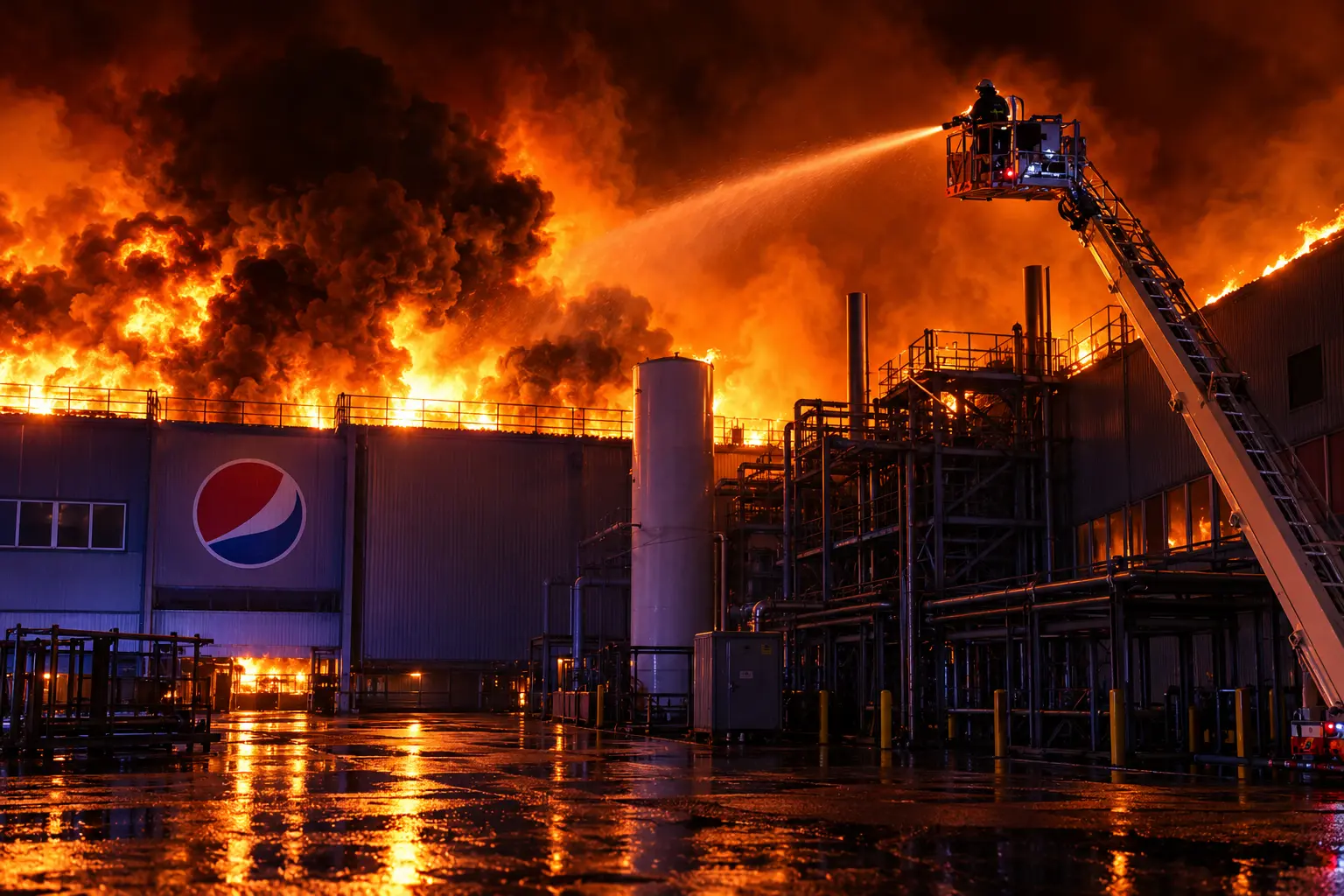
PepsiCo said a production plant in Ukraine’s Mykolaiv region was damaged on 29 August, and that none of its people were hurt. Emergency crews spent that night on a food-industry warehouse fire after attack drones hit Mykolaiv district, and the company said it was measuring the harm and trying to get drinks and snacks back into shops.
PepsiCo Confirms a Mykolaiv Plant Was Hit
The note went out on 30 August, a Sunday. It named the date, the region, and the one fact the company wanted on the record first: no injuries.
On 29 August, PepsiCo’s production facility in Mykolaiv Oblast was damaged. The safety of our employees is our top priority, and we confirm that no one was injured. The company is currently assessing the full extent of the consequences and taking measures to resume product supply to our customers and consumers in Ukraine.
PepsiCo Ukraine, 30 August 2026 statement
The Sunday statement from PepsiCo Ukraine did not say which of the two southern complexes was struck, how much of the line is down, or when bottled juice will move again. The same text went up on Instagram.
Mykolaiv’s State Emergency Service, without naming the firm, reported a warehouse at a food company on fire after strikes across the region on 29 August. Georgy Reshetilov, acting head of the Mykolaiv Regional Military Administration, said attack drones hit Mykolaiv district and that a food-industry warehouse burned. Fire crews worked under the threat of another strike. Local accounts later named a Sandora warehouse and a complex that bottles Pepsi and Lipton Ice Tea.
The Juice on Ukrainian Hotel Breakfast Tables
For anyone who has sat down to breakfast in Kyiv, Lviv, or Odesa, the carton on the table is often Sandora or Sadochok. Those juices, plus Pepsi, 7UP, Mirinda, and Lipton Ice Tea, are the drinks PepsiCo still sells in Ukraine. The snack aisle is Lay’s, Cheetos, Doritos, and KhrumTeam. Dairy and baby food sit under Chudo, Slovianochka, Mariyka, and Agunya.
THE 14 BRANDS STILL SOLD IN UKRAINE
- Juices: Sandora and Sadochok, the cartons hotels and cafes pour at breakfast.
- Soft drinks: Pepsi, 7UP, Mirinda, and Lipton Ice Tea, bottled at the southern drinks complex.
- Snacks: Lay’s, Cheetos, Doritos, and KhrumTeam from the Mykolaiv snack lines.
- Dairy and baby food: Chudo, Slovianochka, Mariyka, and Agunya, made at the Kyiv-region dairy plant.
PepsiCo’s Ukraine site still lists two Mykolaiv plants for snacks and drinks plus a dairy, baby-food, and juice plant in the Kyiv region, and it still counts 14 brands. The southern sites are the old Sandora heartland. Juice, soda, iced tea, and chips all ran out of Mykolaiv Oblast before the full-scale war, and drinks production was put back on those lines in 2023.
A hit on that warehouse is not a logo problem in Purchase, New York. It is a hole in the juice and iced-tea flow that shops, railway kiosks, and hotel kitchens actually order. PepsiCo has not said how many days of stock sit in depots farther north.
Four Lines Moved North, Then That Plant Burned
This is the second time a PepsiCo site in Ukraine has taken a wartime blow, and it follows a move the company already made to get juice away from the south.
In February and March 2022 the plants stopped and staff were helped out of the region. Early in 2023, PepsiCo Ukraine shifted four production lines to Vyshneve, a Kyiv-region town, over six months. Alina Matkivska, then head of corporate communications, said in May 2023 that Sandora and Sadochok were being packed again at Vyshneve, including orange, cherry, tomato, multivitamin, and pomegranate juices, and that drinks production had also restarted at the Mykolaiv complex.
THE WARTIME PRODUCTION CALENDAR
- February 2022: Plants in Ukraine halt as the full-scale invasion begins and staff are moved.
- March 2023: Sandora and Sadochok resume at Vyshneve; bottled drinks restart in Mykolaiv Oblast.
- 21 September 2023: Debris from a downed missile hits the Vyshneve plant, burning a dairy warehouse and part of production.
- 23 August 2026: Drones hit the Mondelez chocolate plant in Trostianets, injuring five workers.
- 29 August 2026: The Mykolaiv PepsiCo site is damaged and a food warehouse burns; the company reports no injuries the next day.
The inland plant was supposed to be the safer home for juice. On 21 September 2023, fragments from a downed missile landed on the Vyshneve grounds. A dairy warehouse was partly destroyed and production rooms were damaged. Some local accounts said workers were hurt; PepsiCo Ukraine did not comment that day. A company source later said the worst damage was to finished-goods storage, that juice and dairy filling lines were also hit, and that the lines were expected back in about a week.
Drinks production in Mykolaiv was never fully switched off after that. An April 2025 staff interview inside the company described people going back to the Mykolaiv juice plant and treating the return as a reason to stay. The southern complex that was too close to the front in 2022 was running again when the 29 August strike came in.
Six Days Earlier, Drones Hit a Chocolate Plant
The Mykolaiv fire did not land on an empty week for American food brands in Ukraine. On 23 August, six days before the PepsiCo strike, drones hit a Mondelez International plant in Trostianets, in Sumy Oblast. Foreign Minister Andrii Sybiha said two drone strikes damaged the buildings and injured several employees, and that no one was killed.
The Sumy Oblast Prosecutor’s Office said five people were hurt, two men and three women. Yurii Bova, the mayor of Trostianets, called the targets by the names on the boxes. “Children’s Oreo cookies or Barni biscuits are Russia’s targets in Ukraine today,” Bova wrote after the strike. The Trostianets site is Ukraine’s only full-cycle chocolate plant, running Korona, Milka, Oreo, Barni, TUC, Belvita, Dirol, and Halls. It had already been hit in February 2026 and again in June.
Drinks warehouses and a chocolate plant are not military stores. They are the plants that keep ordinary food on sale in a country where shops, trains, and hotels are still trying to run. When those buildings burn, the next shortage shows up as a missing carton, not as a line on a New York earnings call.
Russia Makes Up 5% of PepsiCo Sales
The Mykolaiv hit is ugly on the ground and small in the 10-K. PepsiCo’s 2024 annual filing said Ukraine accounted for under 1% of consolidated net revenue in 2024 and 2023, and for under 1% of assets. The 2025 filing no longer prints a Ukraine sales line. It still prints Russia in bold type.
PEPSICO SALES IN RUSSIA AND UKRAINE
| Market | 2025 net revenue | Share of group sales | What the filings show |
|---|---|---|---|
| Russia | $4.768 billion | 5% in 2025, 4% in 2024 | Third country in the 10-K table, after the United States and Mexico |
| Ukraine | Not broken out in 2025 | Under 1% in 2024 and 2023 | Subsidiaries listed as Sandora LLC and Wimm-Bill-Dann Ukraine |
| PepsiCo group | $93.925 billion | 100% | Up from $91.854 billion in 2024 |
Russia’s $4.768 billion in 2025 was up 22.9% from $3.880 billion a year earlier, and the 2025 Form 10-K states that Russia was 5% of 2025 net revenue. The same filing says Russia held 20% of group cash at year end. Named plants in that report include a snack site at Kashira and a dairy plant in Moscow. After 2022 the company stopped advertising some drinks in Russia and dropped the Pepsi, 7UP, and Mountain Dew names there, then kept selling cola and lemon-lime under other labels.
Ukraine’s National Agency on Corruption Prevention put PepsiCo on its international sponsors-of-war list in September 2023 because the Russian business stayed open. That listing landed in the same month as the Vyshneve strike. The 29 August fire does not change the sales mix. It does put another hole in the smaller, more exposed set of plants that still feed Ukrainian shops.
Why Mykolaiv Is Already a No-Go for Travelers
Mykolaiv is not a city Western governments are sending visitors toward. The UK Foreign, Commonwealth and Development Office, in advice still current on 2 September 2026, tells British nationals to stay against all travel to Mykolaiv and to every other Ukrainian region except a short list in the west. The United States kept Ukraine at Level 4, Do Not Travel, in an update dated 28 August 2026, citing missile and drone strikes on cities far from the front.
WHAT OFFICIAL ADVICE ALREADY SAYS
- United Kingdom: No travel to Mykolaiv, or to any region outside a western band that includes Lviv, Zakarpattia, Ivano-Frankivsk, Ternopil, and Chernivtsi.
- United States: Level 4 for the whole country, reissued on 28 August 2026, with the Kyiv embassy still open.
- The local picture: Drones and missiles have already hit Mykolaiv’s port, shops, and power, and now a drinks warehouse.
People who still fly into Lviv or sit in a Kyiv hotel are drinking the same Sandora and Lipton that come off those southern lines. The carton does not carry a warning that its plant has been hit twice in three years. PepsiCo has not said which Mykolaiv complex burned, how long the filling lines will sit idle, or whether Vyshneve can cover the gap this time. Until it does, the juice on a Ukrainian breakfast table is running on whatever stock survived the fire.

Marriott Stakes the JW Name on a Converted Guanacaste Resort

Alaska Stakes Aurora Suites on an Uncertified 737-10

Leeds Bradford Strike Puts Aena Between Two Airports

United Bets on Flagstaff Again With Denver Flights

UK eGates Start Letting British Passengers Skip the Passport Scan

Flight Cancellations Rise While the FAA Shrinks Staffing Targets

Airbnb’s 6% Direct Links Undercut the Host Website Pitch

United Folds Newark’s Lima Nonstop Into Its Houston Hub

Hitachi’s Aurora Faults Drove the EMR Bank Holiday Strike

Grand Canyon Hotels Close After a Repeat Pipe Flood
-
 AIRLINES2 months ago
Flight Cancellations Rise While the FAA Shrinks Staffing Targets
-
 HOTELS2 months ago
Airbnb’s 6% Direct Links Undercut the Host Website Pitch
-
 AIRLINES2 months ago
United Folds Newark’s Lima Nonstop Into Its Houston Hub
-
 NEWS2 months ago
Hitachi’s Aurora Faults Drove the EMR Bank Holiday Strike
-
 HOTELS2 months ago
Grand Canyon Hotels Close After a Repeat Pipe Flood
-
 AIRLINES2 months ago
United Bets the A321XLR on 10 New International Cities
-
 NEWS2 months ago
The EU Pulled the 2026 ETIAS Date After Border Chaos
-
 NEWS2 months ago
ATSB Opens Six Sydney Airport Ground Conflict Files