
HOTELS
Royal Caribbean Buys Half of Sandals and the Storm Risk
Royal Caribbean is paying $3 billion for half of Sandals, buying Caribbean land that cannot sail away from hurricanes like its ships.

Royal Caribbean Group agreed on September 23, 2026, to pay about $3 billion in cash for a 50% stake in Sandals and Beaches Resorts. The joint venture is due to close in early 2027 if regulators sign off.
The cruise company is buying Caribbean land it could not build in Mexico, and three of the Jamaica hotels in that land deal are still shut after Hurricane Melissa.
Royal Caribbean Pays $3 Billion for Half of Sandals
An 8-K filed the same morning says the company entered definitive agreements to acquire a 50% equity interest for about $3 billion in cash in the business that comprises Sandals and Beaches Resorts. Morgan Stanley has committed the debt. The Stewart family keeps the other half. Adam Stewart, executive chairman of Sandals, stays in that job and will share the joint-venture board with Jason Liberty, chairman and chief executive of Royal Caribbean Group.
Reservations, loyalty programs, resort operations, and cruise operations stay as they are, the companies said. Royal Caribbean operates 71 ships to more than 1,000 destinations through Royal Caribbean, Celebrity Cruises, and Silversea, plus a 50% stake in TUI Cruises. It plans to start Celebrity River Cruises in 2027. The release frames the Sandals move as a way into a slice of a $2 trillion vacation market.
THE SANDALS STAKE
| Term | Detail |
|---|---|
| Stake | 50% equity in Sandals and Beaches Resorts |
| Cash price | About $3 billion |
| Implied value of the whole business | About $6 billion |
| Multiple | About 10 times forward EBITDA |
| Financing | Committed debt from Morgan Stanley |
| Close | Early 2027, subject to approvals |
| Board | Jointly led by Jason Liberty and Adam Stewart |
The forward EBITDA multiple of about 10 times is the first public profit yardstick for a company that has never reported earnings. On a $3 billion price for half the equity, that multiple implies about $300 million of forward EBITDA for the stake, or about $600 million for the whole group. Those are implied figures, not published results. The companies said the deal should add to Royal Caribbean’s earnings in 2027.
We have been building a vacation platform that brings joy to millions of people around the world and creates meaningful relationships that last with our guests. Our partnership with Sandals and Beaches Resorts is an important next step on that journey.
Jason Liberty, Chairman and CEO, Royal Caribbean Group, joint announcement
Liberty signed with Stewart at Royal Caribbean’s new headquarters in Miami. BofA Securities and PJT Partners advised Sandals. Perella Weinberg Partners and Morgan Stanley advised Royal Caribbean.
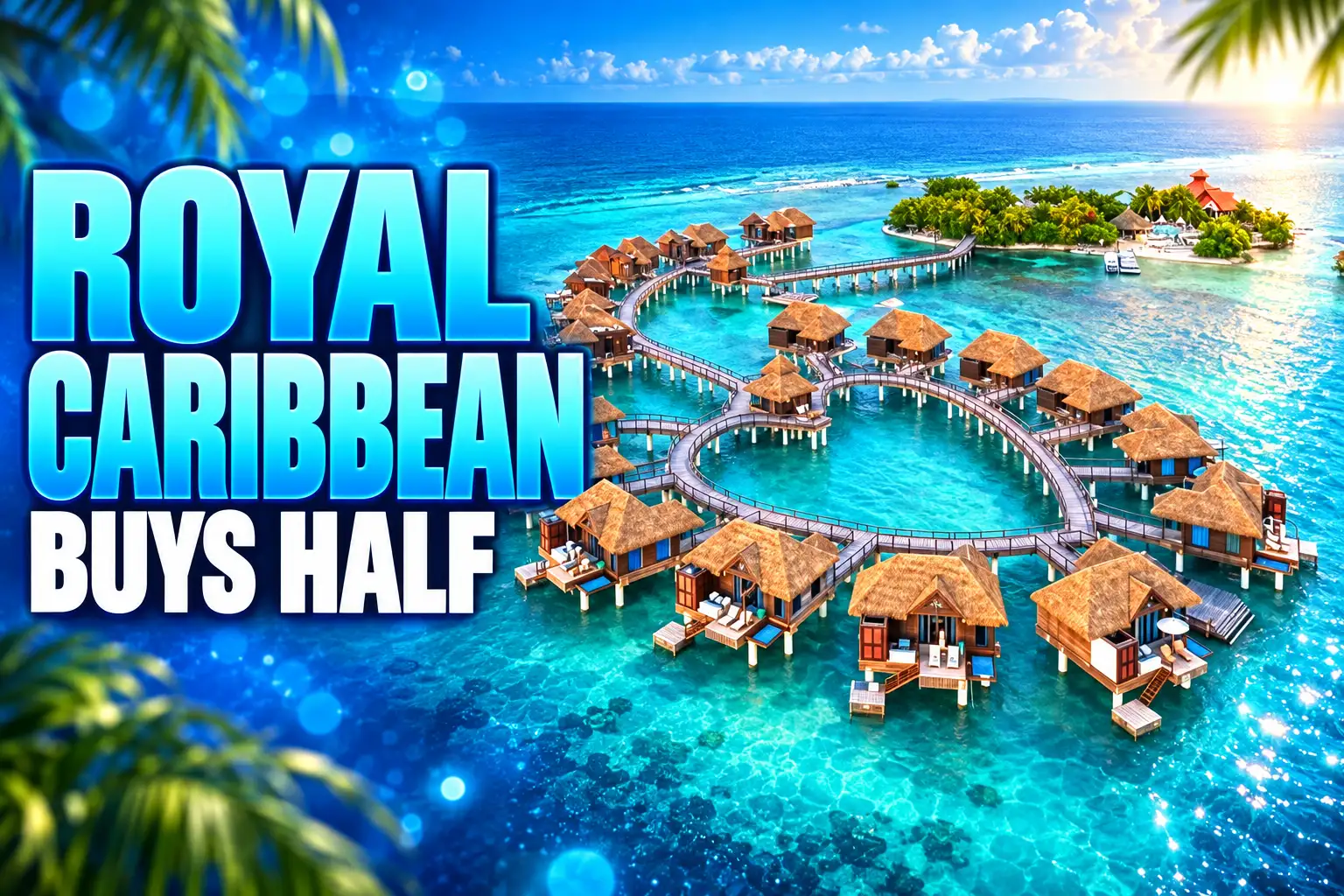
Three Jamaica Flagships Are Still Closed
Hurricane Melissa, a Category 5 storm, came ashore on Jamaica’s south coast on October 28, 2025. Sandals shut all eight of its Jamaica hotels, then brought five back on December 6, 2025: Sandals Dunn’s River, Sandals Royal Plantation, Sandals Ochi, Sandals Negril, and Beaches Negril.
The other three stayed dark. In March 2026 the company turned the downtime into a $200 million rebuild it billed as Sandals 2.0, rather than a straight repair job. Those doors are still shut.
THE THREE STILL SHUT
- Sandals South Coast: Hardest hit on the south coast; set to reopen on November 18, 2026.
- Sandals Montego Bay: Flagship on the north coast; set to reopen on December 18, 2026.
- Sandals Royal Caribbean: The Montego Bay resort that still carries the cruise line’s name in trade use, listed on the brand site as Sandals Caribbean Cay; set to reopen on December 18, 2026.
The brand site still lists seven adults-only Sandals resorts in Jamaica plus Beaches Negril. Stewart told travel advisors the wider group runs 20 resorts. Adults-only Sandals hotels sit in Jamaica, Antigua, Saint Lucia, the Bahamas, Barbados, Grenada, Curaçao, and Saint Vincent and the Grenadines. Beaches, the family brand, has hotels in Negril and Turks and Caicos, with more planned for Exuma, Barbados, Runaway Bay, and Saint Vincent.
A ship can leave a storm track. A beach hotel cannot. Royal Caribbean is buying a 50% interest in buildings that spent the past year proving that point, including one that still answers to the Royal Caribbean name in Montego Bay.
Mexico Already Said No to Perfect Day
In May 2026, Mexico’s environment minister, Alicia Bárcena, said Perfect Day Mexico would not be approved in Mahahual, a fishing town on the Costa Maya. Semarnat, the environment ministry, had flagged mangroves, water, and the coast. President Claudia Sheinbaum said the park would not go ahead at that site. Royal Caribbean had already taken control of the Costa Maya cruise port and pitched the park as a land copy of Perfect Day at CocoCay in the Bahamas.
Liberty later told investors the company was still talking with Mexican officials about a changed plan. Analysts at UBS treated the project as delayed rather than dead. The May rejection still stands as the last clear government word on Mahahual. Four months later, Royal Caribbean put $3 billion of borrowed money into hotels that already exist, in countries that already host its ships, instead of another fight over a new water park.
The two moves are not the same product. Perfect Day is a day port for people who sleep on the ship. Sandals is a week on the sand with the wallet locked in the safe. Buying the second does not reopen the first. It does give Miami a Caribbean room inventory that does not need a new environmental permit in Quintana Roo.
The Family Sells Half and Stays Put
Gordon “Butch” Stewart founded Sandals in Montego Bay in 1981 with a 99-room hotel. He died in 2021. The trusts around his estate then spent years in a family fight that pitted relatives in the United States against Adam Stewart and siblings in Jamaica. That fight ended in June 2026. The group employs about 20,000 people across nine Caribbean territories.
On June 30, 2026, Stewart told an interviewer the company was not for sale. “At this stage, we’re just kind of warming up, so we’re not looking at exiting,” he said. “I’m not going anywhere.” He was 45. He said Sandals had been in the market for building money, not an exit, and that “all the majors” had circled for more than a decade. Sale processes over the past ten years had not produced a deal.
Twelve weeks later he sold half.
HOW THE HALF SALE ARRIVED
- 1981: Butch Stewart opens the first Sandals hotel in Montego Bay.
- 2021: Stewart dies; the estate fight begins.
- June 2026: The family settles. Adam Stewart says Sandals is not for sale.
- September 23, 2026: Royal Caribbean signs for 50%. Stewart stays executive chairman.
On a call with about 5,000 travel advisors the day of the announcement, Stewart called the deal “Sandals 3.0” and a way to grow faster without listing the company. He said the purchase puts no new debt on Sandals, that general managers and sales teams stay, and that new hotels should create 7,000 jobs. Some of those hotels, he said, will sit outside the Caribbean.
If you hear nothing else, hear this: This is a growth story. Sandals is not becoming a public company. Sandals remains Sandals and Beaches remains Beaches. This is not a slash and burn.
Adam Stewart, Executive Chairman, Sandals Resorts, advisor call, September 23, 2026
Dionisio D’Aguilar, a former Bahamas tourism minister, said he was glad Stewart was staying in day-to-day control, arguing that cruise lines have a weak record running hotels. The structure matches that worry: Miami puts up the cash and the debt, Montego Bay keeps the operating chair.
The September 22 Selloff
News of the talks leaked on September 22. Royal Caribbean shares closed that day at $234.89, down $15.36, or 6.14%, from $250.25, a 52-week low. The signed terms the next morning did not reverse the verdict. Carnival and Norwegian slipped with it, which muddies a clean reading, but Royal Caribbean was the only one of the three buying a hotel company.
The cash is borrowed. As of June 30, 2026, the group reported $6.9 billion in liquidity at June 30, counting cash and undrawn revolving credit, with $875 million of cash on the balance sheet. In July it raised the revolver by $250 million to $6.6 billion. That is enough dry powder to fund a $3 billion check. It is also a reminder that the beach purchase sits on top of a cruise balance sheet, not beside a pile of idle cash.
WHERE ANALYSTS SPLIT
- Stifel: Steven Wieczynski wrote that the market clearly dislikes this kind of deal and that he was not sure he understood the rationale either. He said running an all-inclusive land hotel is much different from running a ship, and that Sandals’ adults-only focus goes against the family theme Royal Caribbean has built.
- Bernstein: Analysts called the move highly surprising, said the price looked expensive, and asked how a couples resort chain fits a company that sells family megaships.
- Truist: Analysts were more open to a wider tie-up, saying executives see strong crossover between the two guest lists if the work is done well, and calling Royal Caribbean’s managers among the strongest they cover.
SCALE AT A GLANCE
- Royal Caribbean fleet: 71 ships across three wholly owned brands, plus a 50% stake in TUI Cruises.
- Sandals footprint: 20 resorts, per Stewart, and about 20,000 staff.
- Liquidity: $6.9 billion at June 30, 2026, before the Sandals check is written.
- Implied Sandals profit: About $600 million of forward EBITDA for the whole group, if the 10-times multiple holds.
The louder problem is the price against a stock that was already having a rough year, not the press-release language about a lifetime of vacations. A $3 billion land cheque is easy to fund on paper and hard to defend if the hotels take a storm year like 2025 again before the multiple is earned.
Sandals Says the Resorts Will Not Become Beach Clubs
Royal Caribbean’s best-known land product is Perfect Day at CocoCay, a private island built for people who get back on the ship at dusk. Sandals is the opposite bet: couples, no children, butler suites, overwater villas, and a week that never involves a muster drill. Beaches is the family cousin, with waterparks and a Sesame Street tie-up, which is closer to Royal Caribbean’s core guest. The adults-only majority of the portfolio is not.
Liberty has said the company is entering all-inclusives for the same reason it entered river cruising. Stewart told advisors the brands will not merge in the guest’s face. He said travel advisors will still work with Sandals business development managers, not Royal Caribbean’s, and that he hoped they would get more hotels to sell. He also talked about later links between loyalty programs, technology, and supply chains.
The fear that travels with this deal is simpler than any loyalty chart. It is that a Sandals beach becomes a day pass for people off a megaship, the way a private island already works. Stewart’s answer on the advisor call was that Sandals remains Sandals. Existing bookings do not change. There is no Sandals-branded ship in the announcement, and no plan in the filing to fold the resorts into Perfect Day.
That promise will be tested in places where the two already sit on top of each other. Sandals Royal Bahamian is minutes from the Nassau pier. Several Jamaica hotels sit a short drive from Ocho Rios and Montego Bay cruise docks. Cross-selling a week at Sandals after a cruise, or a cruise after a week at Beaches, is the friendly version of the overlap. Putting cruise passengers on the same pool deck as honeymooners is the version Stewart has to keep off the property if the couples brand is going to stay worth $6 billion.
Bartlett Wants the Jobs to Stay Jamaican
On September 25, Jamaica’s tourism minister, Edmund Bartlett, welcomed the signing. A ministry release quoted him calling Sandals “a Jamaican success story” built on Butch Stewart’s vision and on Caribbean staff, and saying Adam Stewart had carried that legacy into a new chapter. Bartlett said Royal Caribbean’s customer base could bring more visitors, more investment, and more work for Jamaican farmers, manufacturers, attractions, and trainees, in line with the island’s Tourism 3.0 plan to keep more of the visitor dollar at home.
That is the local ledger the Miami share price does not show. Sandals is one of the Caribbean’s largest private employers in tourism. A growth story with 7,000 jobs attached to new hotels is the offer Stewart made to advisors. The other side of the same offer is a foreign cruise company as equal owner, funded with Morgan Stanley debt, and a board that Liberty co-chairs. Approvals in several island states still sit ahead of an early 2027 close.
Sandals South Coast is due to reopen on November 18, 2026. Sandals Montego Bay and Sandals Royal Caribbean are due on December 18. The joint venture is not supposed to close until after those doors open. Royal Caribbean will then own half of a rebuilt Jamaica flagship that shares its name, on an island that already learned, in October 2025, that the hotel cannot sail away.
Disclaimer: This article is news reporting and analysis of a corporate deal, and it is for information only. It is not investment advice, a recommendation to buy or sell Royal Caribbean Group shares, or advice on any cruise or resort booking. Readers who may act on the share price, the joint venture, or related travel plans should consult a licensed financial adviser or a qualified travel professional first. Figures, close dates, resort reopenings, and regulatory status come from company filings and statements as published and can change before the deal closes.

The World Cup Ended and U.S. Arrivals Fell Harder

Royal Caribbean Buys Half of Sandals and the Storm Risk

Hersheypark Docks Tidal Force After 32 Years of Splashes

NATS Fault Cancels More Than 1,000 UK Flights

TSA Gateside Turns Gate Visits Into a PreCheck Perk

Flight Cancellations Rise While the FAA Shrinks Staffing Targets

Hitachi’s Aurora Faults Drove the EMR Bank Holiday Strike

United Bets the A321XLR on 10 New International Cities

Airbnb’s 6% Direct Links Undercut the Host Website Pitch

Mont Blanc Tops the Hiking List on Already Busy Trails
-
 AIRLINES1 month ago
Flight Cancellations Rise While the FAA Shrinks Staffing Targets
-
 NEWS1 month ago
Hitachi’s Aurora Faults Drove the EMR Bank Holiday Strike
-
 AIRLINES1 month ago
United Bets the A321XLR on 10 New International Cities
-
 HOTELS4 weeks ago
Airbnb’s 6% Direct Links Undercut the Host Website Pitch
-
 DESTINATIONS1 month ago
Mont Blanc Tops the Hiking List on Already Busy Trails
-
 NEWS1 month ago
ATSB Opens Six Sydney Airport Ground Conflict Files
-

 NEWS1 month ago
The EU Pulled the 2026 ETIAS Date After Border Chaos
-
 NEWS4 weeks ago
Extra Months on Old UK Passports Still Block EU Entry