
AIRLINES
Booking.com Warns Costly Flights Are Slowing Holiday Demand
Glenn Fogel says Europe and Asia holiday demand is softening as jet fuel lifts fares, while domestic trips still grow.

Booking Holdings cut its fourth-quarter room-night outlook to growth of 1% to 3% after jet fuel and weaker foreign trips hit Europe and Asia. Chief executive Glenn Fogel said demand in those regions has seen a “bit of a softening” as airfares rise faster than wages.
The warning followed a summer in which booked nights still rose 7%. The squeeze is showing up as shorter, closer trips first, with the open fuel bill waiting in 2027, when airline hedges thin out.
Booking’s Fourth Quarter Guide Slows to 1% to 3%
Fogel’s company posted its third quarter 2026 financial results on November 3 and beat the top of its own targets. Customers booked 345 million room nights, up 7% from a year earlier. Gross bookings, the face value of trips before cancellations, reached $54.5 billion, up 10%, or about 11% in constant currency.
Adjusted revenue rose 9% to $9.8 billion. Reported revenue fell 1% to $8.9 billion after a $900 million cut tied to an FTC matter at Priceline, which the company left out of its adjusted figures. Constant-currency hotel rates were up about 3%.
The forward look is a different quarter. Booking said global demand eased late in the third quarter, with foreign trips softer and home-country stays still firm. October then added Middle East route cuts, higher airfares, and unrest in some European cities. The guide assumes those direct and indirect effects last through year-end.
BOOKING’S SUMMER BEAT AND WINTER GUIDE
| Measure | Q3 2026 result | Q4 2026 guide |
|---|---|---|
| Room nights | 345 million, up 7% | up 1% to 3% |
| Gross bookings | $54.5 billion, up 10% | up 2% to 4% |
| Adjusted revenue | $9.8 billion, up 9% | up 0% to 2% |
Gross bookings in the fourth quarter are seen up 2% to 4% as reported, or 4% to 6% in constant currency. Adjusted earnings before interest, tax, depreciation and amortisation are seen about flat. For the full year, the company still points to high-single-digit growth in gross bookings, adjusted revenue and adjusted EBITDA.
CFO Ewout Steenbergen told analysts the late-quarter slowdown was “driven by international travel.” He also said the first-half 2027 booking file still looked healthy as a directional read, which is why Fogel can warn about winter without walking away from the business.
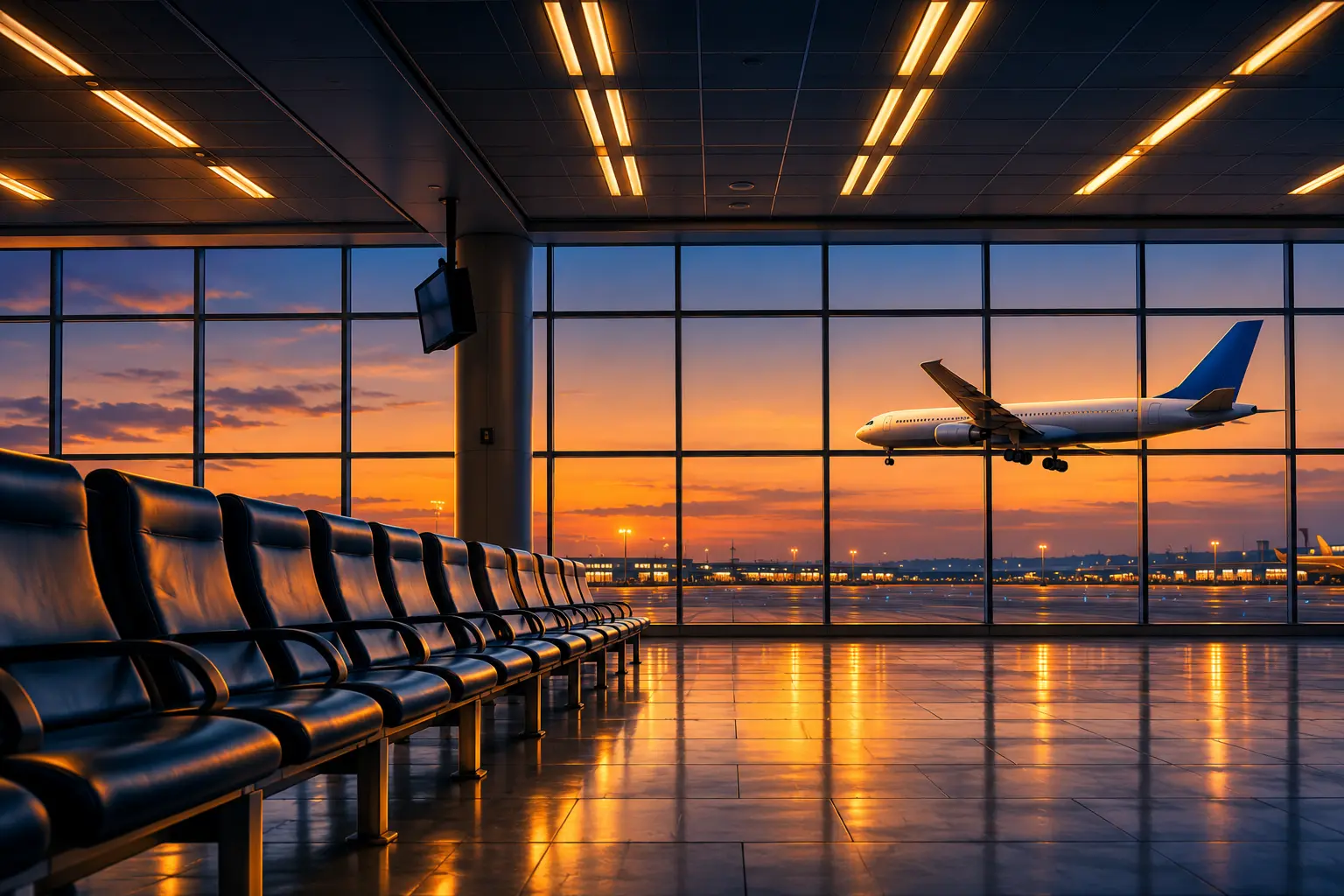
Domestic Stays Still Outran International Trips
On the interview circuit after earnings, Fogel split the summer the way the guide now splits the winter. Domestic travel grew at a high single-digit rate from July through September. International travel grew at a low single-digit rate.
“It’s not surprising looking at the state of the world that would happen,” he said. Images of protests, including those in Paris, can also put people off a booking, he added.
HOW THE MIX MOVED IN Q3
- Home-country stays: High-single-digit growth, the sleeve that held up as ticket prices rose.
- Cross-border trips: Low-single-digit growth, the sleeve that Fogel now says is softening in Europe and Asia.
- Flights on Booking: Tickets sold through the group still rose 19%, even with higher fares and fewer seats on some routes.
That 19% flight gain sits beside a hotel-night slowdown, and it is the tell. People are still moving, but the trip is being rewritten around price: a shorter hop, a stay in the same country, a later booking once the fare is known. Alternative stays were 37% of Booking.com room nights and also grew 7%, which fits a customer hunting for a cheaper bed when the flight has already taken a bite.
Steenbergen said October’s drag included “elevated airfares” and “localized unrest in certain European cities.” Fuel sets the ticket. The news clip from a capital on fire sets the cancellation. Booking is collecting both, which is why a 7% summer can be followed by a 1% to 3% winter without the desire to go on holiday having vanished.
What Jet Fuel Now Costs Airlines
The price shock started at the Strait of Hormuz. Air strikes on Iran at the end of February, and the response that followed, shut the waterway to commercial shipping. IATA, the airline trade group, called it the largest supply cut in the history of the oil market. Crude supply fell by about 10 million barrels a day, and physical crude briefly neared $150 a barrel.
Jet fuel moved further than crude. IATA said prices rose above $200 a barrel by mid-April. In its June average jet fuel price of $152 forecast for 2026, the group said that would be almost 70% higher than in 2025, with Brent unlikely to average below $95 this year.
Europe is more exposed than a map of oil wells suggests. Gulf shipments accounted for about 23% of seaborne jet-fuel exports in normal conditions, and Europe took roughly 80% of those Gulf jet cargoes, equal to about 40% of the region’s jet imports. When that pipe closed, the extra cost landed on short-haul tickets that families treat as the first line of a holiday budget.
THE PRICE PATH THAT REACHED FOGEL’S WARNING
- Late February 2026: The Hormuz shutdown begins; jet fuel then sits near $85 a barrel before the spike.
- Mid-April 2026: Global jet prices rise above $200 a barrel as the crack spread between crude and jet hits records.
- June 2026: IATA publishes a 2026 average of $152 a barrel and cuts its view of airline profit.
- End of October 2026: Spot jet still near $180 a barrel.
- November 13, 2026: Asia-Pacific executives put spot jet near $148 a barrel, still far above the pre-war level.
IATA’s June outlook still had global passenger traffic to grow by 2.1% in 2026, with Europe at 2.8%, and with some long-haul flying pushed toward leisure and family trips closer to home. That is the same rotation Booking later printed in its own mix. The wish to travel bent. It did not disappear.
Ryanair’s Cheap Fuel Cover Ends in March 2027
Europe’s largest airline by passengers spent the summer on the cheap side of that spike, and it will not stay there. Ryanair’s results for the six months to September 30, published on November 2, show why Fogel is talking about winter 2026 and why the harder fare fight is dated 2027.
Traffic rose 6% to 125.8 million passengers. Revenue rose 3% to €10.08 billion. Average fares fell 4%, which Michael O’Leary, the chief executive, tied to later bookings after the Middle East war. Operating costs rose 10% to €7.69 billion. Fuel and oil rose 15% to €3.40 billion, because the unhedged 20% of the airline’s fuel roughly doubled to about $130 a barrel. Profit for the half was €2.15 billion. The carrier now plans 214 million passengers for the year to March 2027.
The protection is the point. For the year to March 2027, 80% of Ryanair’s jet fuel is locked at about $67 a barrel. For the year to March 2028, only 25% is locked, and at about $95. On current forwards, the airline put a €2 billion jump in its FY28 fuel bill on the table.
RYANAIR’S HEDGE, THIS YEAR AND NEXT
| Period | Share of fuel locked | Locked price |
|---|---|---|
| Year to March 2027 | 80% | about $67 a barrel |
| Year to March 2028 | 25% | about $95 a barrel |
O’Leary said European short-haul fares will “increase materially” and still may not cover the extra fuel. He has talked about rises of 10%, 15%, even 20%, and about an extra €10 a ticket as the sort of increase that would be needed to offset the bill in full. He does not think the market will pay the whole 20%. The rest of the gap, he said, has to come from pay freezes where deals are not already signed, tighter crew ratios, harder airport talks, and more AI in back-office work.
Unless there is a swift resolution of the Middle East conflict, we expect jet-fuel prices to remain elevated well into 2027.
Michael O’Leary, chief executive, Ryanair results statement
Chief financial officer Neil Sorahan has taken the other side of the same number. An extra €5 or €10 on a Ryanair fare, he said, will not necessarily stop people flying. That split is the whole winter argument in one airline: the ticket can rise a bit without killing the trip, and it cannot rise enough to swallow a €2 billion fuel step without someone else paying, in pay, in seats, or in a thinner route map.
A drop in crude will not cut those tickets on the same clock. Hedges that were bought cheap have to expire before the new price fully hits the fare, and seats that were pulled to protect winter losses do not return the week oil eases. Norwegian already had to unwind some post-war increases because customers would not pay them. The cheap-flight habit is the weak point, not the idea of a holiday.
Paris Lost Bookings After the October 17 Riots
Fogel’s protest line had a date under it. Clashes in Paris on October 17, and the clips that followed, showed up in cancellation files before they showed up on an earnings call.
Jamie Lane, chief economist at short-term rental analytics firm AirDNA, said bookings in Paris on Airbnb, Booking.com and Vrbo fell 18% year on year in the week after October 17, with a similar drop the next week. Almost a third of stays in the seven days starting October 19 were cancelled, he said.
Louis Carrel-Billiard, chief marketing officer at rental manager Agence Butler, said new bookings halved after the riots and last-minute reservations fell by three-quarters. Luxury hotels, through Christophe Laure at lobby group UMIH Prestige, saw a 20% cancellation rate in the last week of October, with last-minute bookings down 60% on normal levels.
The city’s tourism observatory, reading ForwardKeys and Amadeus files as of October 11, put November hotel occupancy 1.9 points below the same point in 2025 and December 0.5 points below. Planned international air arrivals from November 2026 through January 2027 were down 7.8%. Italy was down 30.1%, South Korea 17%, Japan 12.3%, the United States 11.7%, Australia 11.5% and Spain 6.1%. Mexico was up 13.2%. Paris still expects about 40 million visitors in 2026, up 0.9%.
A city can print a record October room rate and still lose the winter file. The people who already had tickets came, paid, and left. The people who were deciding on a screen saw a riot and booked a train to somewhere quieter, or stayed home. That is a fuel story only in the second step: the airfare was already high, and the clip supplied the reason to abandon the cart.
Asia-Pacific Passengers Already Started to Say No
Fogel named Asia beside Europe, and the region’s airline body spent November 13 in Kuala Lumpur describing the same wall from the other side of the ticket.
Wong Hong, director general of the Association of Asia Pacific Airlines, said fuel now makes up about 33% of operating costs, against 25% in IATA’s figures for last year. Spot jet was about $148 a barrel, down from nearly $180 at the end of October and still well above about $85 before the Iran war. “There has to be a breaking point where passengers will say no,” Wong said. Asia-Pacific passenger growth was negative from April through August, he said, with September “just above water,” and capacity cuts are a live risk.
Airline bosses at the same gathering did not agree on how long that price lasts. Ibrahim Canliel, chief executive of Air Astana, called high fuel a “new normal” around $90 to $100 Brent. Ross Leggett, a senior managing executive officer at Japan Airlines, said the airline still treats the spike as cyclical and has budgeted a worst case of $160 a barrel, the average it paid from April to September.
That split matters for Booking’s winter. If Asia’s “no” is already in the departure numbers, Fogel is not guessing from a podcast. He is reading a region that has already given back months of growth, then pairing it with European fares that have further to rise once 80% hedges become 25% hedges.
Summer 2027 Is When the Unhedged Bill Arrives
The next 90 days are Booking’s 1% to 3% quarter: fewer foreign nights, more nights close to home, airfares already high, and a Paris-style headline able to wipe a weekend of pickup. The next year is the unhedged year, when Ryanair and its rivals have to put double-digit fare increases on sale for summer 2027 or cut flying.
WHAT A TRAVELLER ACTUALLY MEETS
- This winter: A Booking night that is more likely to be in the same country, booked later, with the flight taking more of the budget.
- A city in the news: Last-minute cancellations first, then a hole in November and December pickup, even if the destination still talks about a record year.
- Summer 2027 in Europe: Short-haul fares marked up by a double-digit percentage, with an extra €5 to €10 on a low-cost seat treated as the opening bid, not the ceiling.
- The open risk: A carrier that cannot pass on fuel either grounds the thin winter routes or, as O’Leary has warned, does not survive the season.
Fogel’s long view has not changed with the guide. He still expects global travel to grow faster than GDP over 20 years. The line he keeps using is about share, not about a quiet fourth quarter.
We cannot control things like geopolitical issues; what I can do is continue to improve our services. So long as we are getting a bigger share of what in the long term is a growing market, we will be successful.
Glenn Fogel, chief executive of Booking Holdings, on the BBC Big Boss Interview
Share of a growing market is a 20-year sentence. The ticket for a week in the sun is a 2027 sentence, written in jet fuel that is no longer bought at $67 a barrel. Booking can still take a larger slice of fewer foreign nights. The traveller pays the wedge that opened when the hedge file ran out.

Emirates Is Betting Hedges Will Outlast the Iran War

Booking.com Warns Costly Flights Are Slowing Holiday Demand

KLM Moves 5,000 Roles and Shrinks Its European Fleet

The FCDO’s 16-Country Alert Is Aimed at Hub Flyers

Dubai Hotels Wait as European Airlines Skip Winter

United Folds Newark’s Lima Nonstop Into Its Houston Hub

Flight Cancellations Rise While the FAA Shrinks Staffing Targets

Airbnb’s 6% Direct Links Undercut the Host Website Pitch

United Bets the A321XLR on 10 New International Cities

Hitachi’s Aurora Faults Drove the EMR Bank Holiday Strike
-
 AIRLINES3 months ago
United Folds Newark’s Lima Nonstop Into Its Houston Hub
-
 AIRLINES3 months ago
Flight Cancellations Rise While the FAA Shrinks Staffing Targets
-
 HOTELS3 months ago
Airbnb’s 6% Direct Links Undercut the Host Website Pitch
-
 AIRLINES3 months ago
United Bets the A321XLR on 10 New International Cities
-
 NEWS3 months ago
Hitachi’s Aurora Faults Drove the EMR Bank Holiday Strike
-

 HOTELS3 months ago
Grand Canyon Hotels Close After a Repeat Pipe Flood
-
 NEWS3 months ago
The EU Pulled the 2026 ETIAS Date After Border Chaos
-

 NEWS2 months ago
Brussels Closed the EES Pause as Kiosks Keep Failing