
NEWS
CBP Stops Routine Passport Stamps for Most Arrivals
CBP stopped routine U.S. passport stamps on October 1, 2026, leaving banks, work-visa files, and green-card holders without the ink they actually used.

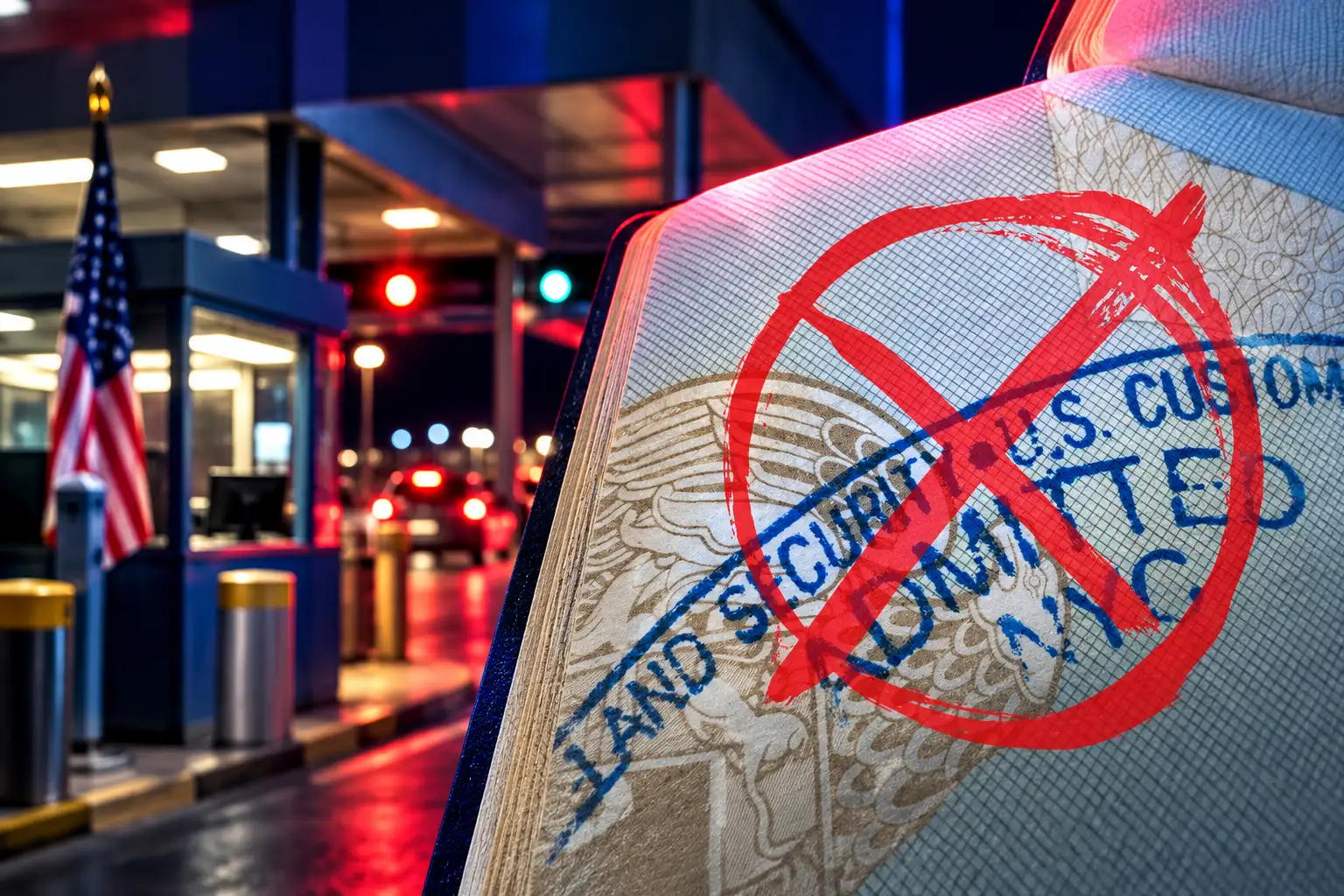
U.S. Customs and Border Protection stopped the routine use of passport admission stamps at primary inspection on October 1, 2026. Who gets in, and for how long, did not change. The mark in the book did.
Collectors will miss the ink. The quieter loss belongs to people who used that stamp as proof for a bank, a school, a work-visa file, or a green-card trip they can no longer look up on the I-94 site.
CBP Ends Routine Passport Stamps at U.S. Arrival
In a Carrier Liaison Program bulletin dated October 1, 2026, CBP said it would cease the routine use of admission stamps during primary processing, the first booth most travelers meet. The agency tied the cut to earlier work on automated forms, mobile tools, and biometric facial matching, and said dropping the stamp reduces primary processing times and operating costs.
The bulletin does not rewrite admission rules. A visitor still gets a class of admission and an authorized stay. What disappears for most people is the wet-ink endorsement that used to sit next to that decision.
Officers have not been told to throw the stamp in a drawer. CBP listed three cases where ink can still hit the page, and none of them is the default at the first booth.
WHEN A STAMP CAN STILL APPEAR
- Secondary inspection: Officers may still stamp a passport after a traveler is pulled for extra screening.
- Immigrant visas: Stamps may still be used in limited circumstances at primary when an immigrant visa is being processed.
- A specific request: A traveler can ask, and an officer may stamp “when appropriate,” which is not a promise.
Sébastien Couix is founder and CEO of Visamundi, a French firm that tracks entry rules. “You can ask,” he said. “My advice is to treat a stamp as a favor, not a right.”
Banks, Schools, and Work Visas Still Need Proof
CBP’s own bulletin is blunt about why the electronic record has to work. Airline APIS transmissions feed the I-94 portal, and travelers rely on that data for banking, schooling, and employment. A bad passenger record can delay a flight and leave a visitor with a broken file.
That is the part the souvenir conversation skips. A U.S. admission stamp was never only a pretty page. It was a portable note that a bank clerk, a registrar, or a future case officer could read without a login.
Joseph Kwon is a Nashville-based immigration attorney. He has been telling clients to treat the ink as a spare copy, not the master file.
Think of the stamp as a receipt. The official record has always been the I-94.
Joseph Kwon, immigration attorney, Nashville
For people on H-1B and L-1 visas, the receipt that now matters is the travel history sitting behind that I-94. Those workers often have to show how much time they spent outside the United States. A missing departure is easier to catch when the passport still shows the trip. It is easier to miss when the page is blank and the only log is a website the traveler has to remember to open.
Houston business-immigration attorneys at Reddy Neumann Brown PC have been pressing the same point since the bulletin landed: after each trip, confirm that both the departure and the return appear, and keep boarding passes until they do. A blank exit in CBP history can surface later in an extension or a green-card filing, long after the airport is behind you.
Your passport used to be the archive. It isn’t anymore.
Sébastien Couix, founder and CEO, Visamundi
Green Card Holders Are Outside the I-94 System
The I-94 was built for temporary visitors. It was not built as a lifetime travel diary for people who already live here.
USAGov’s visitor guide lists returning resident aliens among the groups that do not receive a Form I-94, alongside U.S. citizens, people entering on immigrant visas, and most Canadian citizens who are visiting or in transit. Couix has been warning that green-card holders generally cannot use the I-94 system to look back at their trips, and that temporary workers still need a way to count days spent abroad.
Under the Immigration and Nationality Act, a lawful permanent resident who has been outside the country for more than 180 days can be treated as seeking admission on return. The green card proves status. It does not, by itself, prove the dates of the last trip. For years, those dates lived in the passport.
Kathleen Walker is a Denver-based immigration attorney. She has used stamps as a second trail when an electronic record was wrong, and she has used them to rebuild a client’s travel history. That trail is now a request at the booth, if the officer says yes.
First-time immigrant visa holders sit in a slightly different place. CBP said stamps may still be used when those visas are processed at primary, and those travelers are also on the list of people who generally do not get an I-94. They may leave with ink and no portal, while a tourist leaves with a portal and no ink.
Check Your Electronic I-94 Before You Leave the Airport
For most foreign visitors arriving by air or sea, CBP now points to one place for proof of admission, class of admission, and the date you have to leave. The bulletin says travelers can retrieve that evidence, plus five years of arrival data, from the I-94 website or the CBP Link app, and that anyone who cannot pull the record should contact the local port of entry.
The practical move is the same one Kwon recommends: open the record as soon as you have signal, then save a copy you can find again. On the site you can print your most recent I-94 record. Match your name, date of birth, and passport number first. Then read the class of admission and, above all, the admit-until date.
WHO STILL GETS AN I-94
| Traveler | Routine stamp at primary | Electronic I-94 |
|---|---|---|
| Most foreign visitors by air or sea | No, unless you ask and the officer agrees | Yes |
| Immigrant visa, first admission | May still be stamped | Generally no |
| Returning green-card holders | Not routine | No |
| U.S. citizens | No | No |
| Most Canadian visitors | Not routine | Generally no |
Visa Waiver Program travelers are generally admitted for up to 90 days. Visitors on B-1 or B-2 visas are often admitted for as long as six months. That admit-until date can be shorter than the foil in the passport, because a visa is permission to apply for entry, not a clock for the stay. Someone with years left on a visitor visa can still be admitted for a few months on a given trip.
Walker’s warning is about timing. With a stamp, a traveler could spot a wrong date or visa class before leaving the airport. With only an electronic record, the mistake may not show until inspection is already over. CBP has said the automated I-94 process, which began replacing paper cards for air and sea arrivals on April 30, 2013, saves the agency $15.5 million a year. The stamp was the last analog check still sitting on top of that system.
If you later leave by air or sea, CBP records the exit from the carrier’s manifest. The website is still worth a second look after you get home, because a missing departure is the error temporary workers cannot afford.
What Deferred Inspection Can Still Correct?
Most bad I-94s can be fixed, and waiting makes the fix harder. “If CBP made the mistake, CBP’s Deferred Inspection office fixes it,” Kwon said. “Waiting is what turns a typo into an overstay.”
CBP runs more than 70 Deferred Inspection Sites in the United States and the territories. Staff there can review and correct errors made at the time of entry, including the wrong nonimmigrant class, bad biographical data, or the wrong period of admission. You do not always have to go back to the airport where you landed. The office near your destination can often handle it.
HOW TO FIX A CBP ENTRY ERROR
- Save the record: Download or print the I-94, and keep the passport, visa, tickets, and any approval notice.
- Match the fields: Name, passport number, class of admission, and admit-until date are the ones that turn into overstay problems.
- Contact Deferred Inspection: Call or email the listed site, then go in person if they cannot finish it remotely.
- Bring originals: Mail-in procedures are generally not available, and the office will only repair errors made at entry.
If the I-94 came from U.S. Citizenship and Immigration Services as part of an approval notice, that is a different window. CBP’s deferred sites will not treat it as their mistake. The correction has to go through USCIS, and travelers who ignore a bad admit-until date until it passes are the ones Kwon is talking about when he says a typo becomes an overstay.
Europe and Singapore Already Made the Same Swap
The United States is late to a change other borders already made. Singapore’s Immigration and Checkpoints Authority stopped departure stamps for foreign travelers on April 22, 2019, then, from March 11, 2022, started sending an electronic Visit Pass by email instead of inking arrivals. The e-Pass carries the length of stay and the last day allowed in the country, which is the same job a U.S. stamp used to do in a different format.
Australia dropped routine stamping more than a decade ago and still offers a stamp if you ask a supervisor. The larger break in Europe is newer, and it is finished.
HOW THE INK CAME OFF THE PAGE
- April 30, 2013: CBP begins automating Form I-94 for air and sea arrivals, with the rest of those ports following through May 21, 2013.
- April 22, 2019: Singapore stops departure stamps for foreign travelers.
- March 11, 2022: Singapore starts emailing an e-Pass instead of inking arrivals.
- October 12, 2025: The EU Entry/Exit System begins a staged rollout for non-EU short stays.
- April 10, 2026: EES is fully operational across 29 European countries and replaces the stamping of passports.
- October 1, 2026: CBP stops using admission stamps as a routine step at primary inspection.
The European Commission said EES records the passport, the face, the fingerprints, and the entry and exit, then uses that file to spot overstays. First-time registration is the slow part. Later crossings are a check against a record that already exists. Cyprus and Ireland sit outside that system. The United Kingdom is outside it too.
Singapore already emails the receipt, and Schengen already stores the face and the fingerprints. The United States has now stopped inking the page for most arrivals, and the record lives on a website that a returning resident cannot even open.
Frequently Asked Questions
Does ending stamps change how long I can stay in the United States?
No. The bulletin left admission periods where they were. A shorter-than-expected stay is also not always a mistake, because CBP may limit admission to the date the passport itself expires, which is a cap that never appeared as a separate line on a souvenir stamp.
Is there a fee to look up an I-94 after a flight?
No. For air and sea arrivals, CBP creates the electronic I-94 during inspection at no extra charge. The fee that rose from $6 to $30 on September 30, 2025, applies when you apply for an I-94 at a land border, online, or in the CBP One app, and that provisional record still does not guarantee entry.
Can I still request a paper I-94 at the airport?
Yes, but not at the first booth. CBP says a traveler who wants a paper Form I-94 can ask during inspection, and that those requests are handled in secondary. You can also print the electronic record yourself from the I-94 website or CBP Link without standing in that second line.
What if USCIS issued my I-94, not CBP?
Take it to USCIS, not to Deferred Inspection. If the record arrived with an approval notice, CBP will not treat it as an entry-time error, and the usual repair route is a USCIS filing such as Form I-102 rather than a visit to a port office.
Why does a land exit to Canada or Mexico still need extra proof?
CBP warns that an electronic I-94 issued on arrival may not pick up a later land departure, especially if you are not a Canadian or Mexican citizen and you do not reenter the United States before the admit-until date. The agency still tells those travelers to carry proof of leaving, including a Canadian or Mexican entry stamp, tickets, or receipts, which is the old ink habit in a different country’s booth.
Disclaimer: This article is news reporting and analysis of CBP’s October 2026 admission-stamp bulletin and related I-94 rules, and it is for information only. It is not legal advice, is not a determination of any person’s immigration status, and is not a substitute for advice on visas, admission, or travel history. Readers who need help with an I-94 error, a work-visa filing, or reentry as a resident should consult a qualified immigration attorney or accredited representative before acting. Figures, office procedures, and app names reflect the government pages and statements cited here and can change without a new public bulletin.

Ibiza Airport Flooded as Storm Adam Broke a 2005 Record

The Louvre Is Closed as France Runs Neighbourhood Curfews

UK Tells Travellers to Leave Saudi Arabia by Land

Southwest’s Record Fares Lose Ground to $4.55 Fuel

Leeds Bradford Airport Pauses Half-Term Strikes After Rejections

Flight Cancellations Rise While the FAA Shrinks Staffing Targets

United Folds Newark’s Lima Nonstop Into Its Houston Hub

Airbnb’s 6% Direct Links Undercut the Host Website Pitch

Hitachi’s Aurora Faults Drove the EMR Bank Holiday Strike

United Bets the A321XLR on 10 New International Cities
-
 AIRLINES2 months ago
Flight Cancellations Rise While the FAA Shrinks Staffing Targets
-
 AIRLINES2 months ago
United Folds Newark’s Lima Nonstop Into Its Houston Hub
-
 HOTELS2 months ago
Airbnb’s 6% Direct Links Undercut the Host Website Pitch
-
 NEWS2 months ago
Hitachi’s Aurora Faults Drove the EMR Bank Holiday Strike
-
 AIRLINES2 months ago
United Bets the A321XLR on 10 New International Cities
-

 HOTELS2 months ago
Grand Canyon Hotels Close After a Repeat Pipe Flood
-

 NEWS2 months ago
The EU Pulled the 2026 ETIAS Date After Border Chaos
-

 NEWS2 months ago
ATSB Opens Six Sydney Airport Ground Conflict Files