
AIRLINES
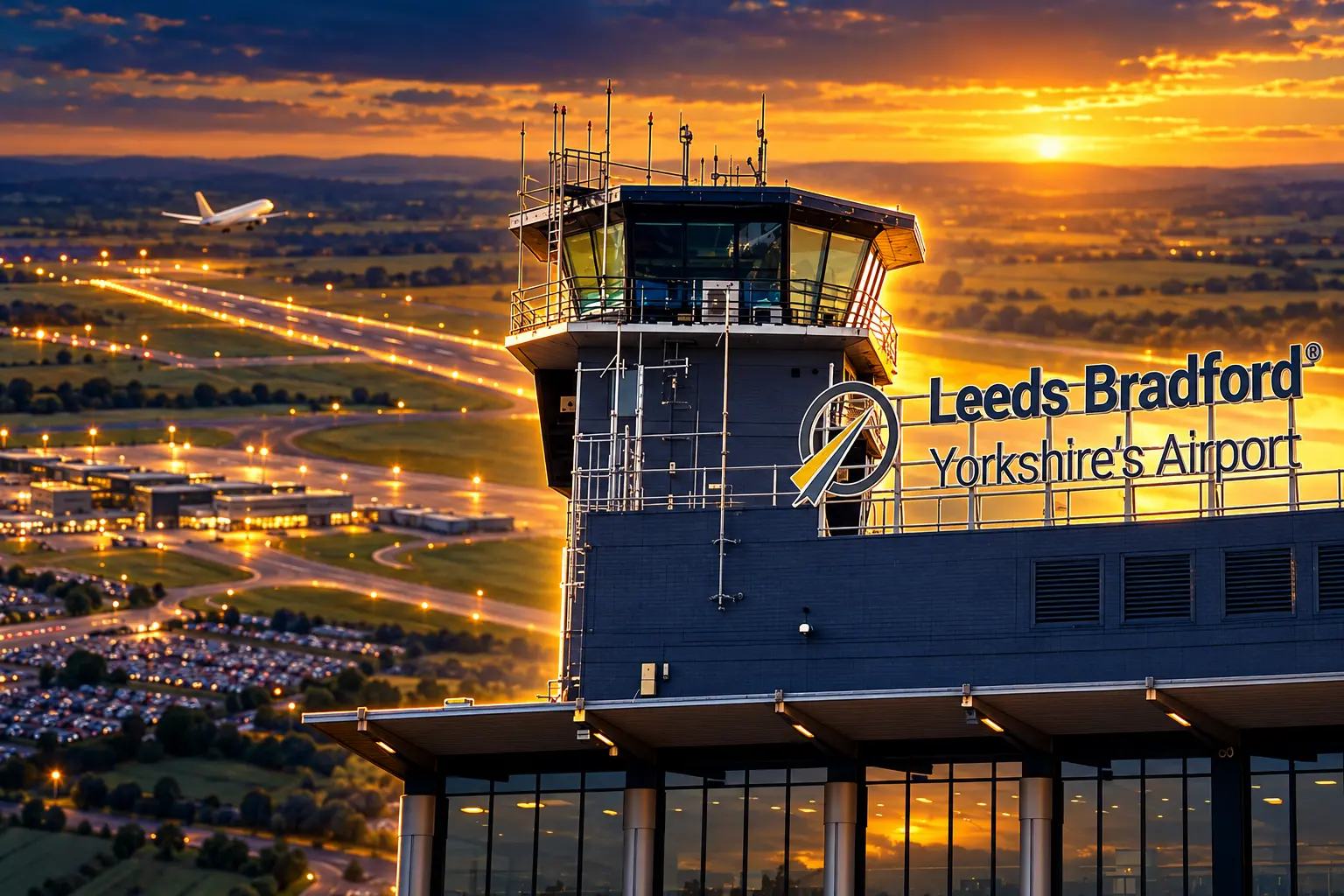
Leeds Bradford Airport Pauses Half-Term Strikes After Rejections
Unite paused Leeds Bradford Airport half-term strikes after workers rejected pay offers, sending a £21,000 gap with Aena-owned Newcastle to Acas.

Almost 130 Unite members at Leeds Bradford Airport have suspended planned half-term strikes after both staff groups heavily rejected the latest pay offers. Talks now go to Acas, the official conciliation service.
The airport says flights will run as normal from 23 October, the first day of the window that had been the union’s main lever over family holidays. The rejected deals stay on the table, and the strike mandate has not been withdrawn.
Half-Term Walkouts Are Off, for Now
The dispute has spent October in a pattern of dates, ballots and last-minute pauses. Air traffic controllers, customer experience staff, security, cleaners, check-in, passport control and passenger assistance had been lined up to walk out, first from 16 to 18 October, then across the school break.
Unite had said a stoppage by that mix of roles would shut the airport, because no aircraft can move without controllers and no passenger can leave without passport control. Leeds Bradford said it had a contingency plan and expected near-normal flying even if people walked. The first test never came. Both groups stood down the weekend action so they could vote.
HOW THE STRIKE DATES WERE PULLED
- December 2025: Formal pay talks since December 2025 open after a four-year deal ends, the same month Aena agrees to buy into the airport.
- 5 October 2026: Unite names a first walkout from 03:00 on 16 October to 06:00 on 18 October for hourly staff, and from 06:00 to 06:00 those days for controllers.
- 12 October 2026: The union adds a second window from 23 October to 2 November, covering October half-term.
- 13 October 2026: Controller strikes for 16 to 18 October are suspended after a late offer, so members can vote.
- 15 October 2026: Hourly staff also stand down that weekend after a separate revised offer. The airport says it will operate as normal.
- 16 to 18 October 2026: No walkout takes place. Flying continues.
- 19 October 2026: Both groups heavily reject the offers. Unite still pauses the 23 October to 2 November action for Acas talks, four days before that window was due to open.
Neil Whitaker, Unite’s regional officer, said members still have a strong mandate. He warned that if the new talks do not produce a deal they will accept, the union will announce strike action that “will have a major impact on the airport.”
£34,000 Versus £55,000 for the Same Job
The claim underneath every date is a pay comparison with Newcastle. Unite wants pay parity with Newcastle Airport for equivalent roles, and it uses starter air traffic control as the sharpest example.
A starter controller at Leeds Bradford earns about £34,000, the union said. The same role at Newcastle is paid £55,000, a gap of £21,000. Unite also argues Newcastle has a lower cost of living, which makes the Yorkshire figure harder to defend.
Leeds Bradford has not published a matching set of grade rates. It has called its package a “fair and responsible offer that is significantly above inflation,” and said the figure reflects economic conditions and “the long-term sustainability of the business.” The actual percentages on the rejected papers have not been released by either side.
LEEDS BRADFORD AND NEWCASTLE, SIDE BY SIDE
| Measure | Leeds Bradford | Newcastle |
|---|---|---|
| Starter air traffic pay (Unite) | about £34,000 | £55,000 |
| Passengers | 4.45 million (year to 31 March 2026) | 5.2 million (2024) |
| Aena interest | 51% of the holdco that owns 100% | 49% through the same holdco |
| EBITDA margin in Aena’s deal pack | 36.4% (FY25) | 56% (2024) |
Those passenger counts sit on different calendars, and the margins are from Aena’s December 2025 investor pack rather than the latest Yorkshire accounts. The pay line is the union’s, and it is the number members have now voted against the airport’s offers on.
Why Aena’s Dual Ownership Fuels the Row
The comparison only bites this hard because of who sits above both airports. On 18 December 2025, Spanish operator Aena agreed to buy 51 per cent of the holding company that owns all of Leeds Bradford and 49 per cent of Newcastle, for £270 million. InfraBridge keeps the other 49 per cent of that vehicle. Unite says the purchase completed in May. Aena’s own notice had pointed to a second-quarter 2026 close.
Aena already holds 51 per cent of London Luton. In the December pack it put Leeds Bradford and Newcastle at about 9.5 million passengers between them, and the three UK airports at about 26.5 million. Chairman and chief executive Maurici Lucena called the deal “a significant step for Aena in countries with enormous potential such as the UK.”
The same pack is also the airport owner’s best defence. Aena said both northern airports “will continue to be operated and managed independently of one another.” Leeds Bradford is a freehold, unregulated airport, so pay is a local bargain, not a formula set in the same room as Newcastle’s seven council shareholders. That independence is exactly what Unite is trying to collapse into a single fairness test.
It is wrong that workers at Leeds Bradford Airport are paid far less than those doing the same job at another nearby airport. These are essential workers who play a vital role in ensuring the smooth running of the airport and the safety of passengers and deserve fair pay. Unite will always fully back our members taking action at Leeds Bradford Airport.
Sharon Graham, Unite general secretary, 12 October 2026 statement
Graham had gone further on 5 October, saying the airport “is very profitable and can more than afford to come back to the table.” The accounts filed around the same week do not read like a cash pile sitting idle.
Record Passengers, Then a Pre-Tax Loss
Leeds Bradford Ltd’s figures for the year to 31 March 2026 show the busiest year the airport has recorded and a swing into the red. Turnover hit a record £62.8 million, up from £61.5 million. Passenger numbers rose to 4.45 million from 4.29 million.
Pre-tax results went the other way. The airport posted a loss of £6.58 million after a £139,000 profit the year before. EBITDA before exceptional items slipped to £19.1 million from £20 million. Operating costs were 6 per cent higher, which the accounts link to the National Minimum Wage, the Real Living Wage and employer national insurance.
THE YEAR TO 31 MARCH 2026
- Passengers: 4.45 million, the airport’s busiest year, up from 4.29 million.
- Turnover: £62.8 million, a record, up from £61.5 million.
- Pre-tax result: a £6.58 million loss, after a £139,000 profit.
- Capital spend: £44.1 million on the LBA: REGEN terminal programme.
That capex is the other half of the money argument. A new arrivals hall, baggage claim, extended departure lounge and contact gates finished in June 2025. Phase two, a refurbishment of the old terminal, began in July 2025 and is due in the second half of 2027. Aena’s pack put net debt at £123 million after a May 2025 refinancing.
Alex Tong, the airport’s chief financial officer, said the year showed “positive progress” and that “major transformation projects inevitably bring short-term challenges.” Vincent Hodder, the chief executive, has put the same point more bluntly, saying the airport cannot deliver profitability from “four and a half million passengers” once regulatory costs are counted, and that expansion is the path out. Unite is asking that labour catch up before that bet pays off.
Jet2 and Ryanair Hold 82 Percent of Traffic
If controllers had walked through half-term, the pain would not have been spread evenly across British aviation. It would have landed on two airlines and on Yorkshire families who treat Yeadon as their local runway rather than a transfer hub.
Jet2.com was the largest airline at the airport in 2025/26, with 49 per cent of passengers. Ryanair was second, with 33 per cent. Together they hold 82 per cent of traffic. Aer Lingus, Wizz, KLM, Tui, easyJet, Sun Express and Aurigny also flew the remaining share.
Aena’s December pack described Leeds Bradford as Jet2’s main base in the region, with the airline present since 2003 and 16 aircraft on site, and as a mostly outbound European leisure airport. That is why a controller strike in late October is not an abstract roster fight. It is a threat aimed at the half-term sun roster those 16 aircraft are built to fly.
WHO LIFTS THE PASSENGERS
- Jet2.com: 49 per cent of passengers, the home carrier, 16 based aircraft in Aena’s pack.
- Ryanair: 33 per cent, the second stream of low-cost seats.
- The rest: Aer Lingus, Wizz, KLM, Tui, easyJet, Sun Express and Aurigny share what is left.
A full shutdown was always a hard sell on that mix. The first strike window passed with normal flying. Jet2 had already told customers it was watching the dispute and would publish any effect on its programme; anyone still holding tickets through the school break can check Jet2 latest travel information rather than union calendars. The 19 October pause, after a heavy rejection, keeps legal pressure without grounding the holiday waves the union had named as its target.
Security, Check-In and the Hourly Ballot
Controllers are the group that can close a runway. They are not the whole membership. Unite has run two ballots because it is really two pay arguments sharing one airport.
Hourly staff, in the union’s telling, include security, check-in, passport control, passenger assistance, customer experience and cleaning. Many of those workers, Unite said, are paid just above the minimum wage and have been “struggling with the rising cost of essentials” since the four-year deal ended. For adults aged 21 and over, that legal floor is the National Living Wage of £12.71 an hour from 1 April 2026, up 50 pence, or 4.1 per cent, on the previous rate.
The airport’s own accounts already price that floor in. The 6 per cent rise in operating costs cites the National Minimum Wage, the Real Living Wage and employer national insurance as drivers. In other words, the company is paying more for labour than a year ago and still facing a rejection on the next offer. The union’s answer is that “just above” the legal minimum is not the same as matching Newcastle, and that a record passenger year should move hourly rates as well as controller grades.
Until 19 October those two groups were on slightly different clocks. Hourly staff had an offer first and were voting in mid-October. Controllers were still waiting, then received a late package on 13 October. Both papers came back heavily rejected. Both groups then agreed, in Whitaker’s words, to pause “in good faith” for Acas.
The Strike Mandate Survives the Acas Pause
Acas is now the third party in a fight that has already burned a month of headlines. A Leeds Bradford spokesperson said a revised offer “remains on the table for both our air traffic controllers and our hourly paid colleagues,” and that both sides agree Acas support “will be helpful to progress the discussions.” The airport said it anticipated that process would “commence in the coming days.”
With the dates withdrawn, the same spokesperson said the airport “will operate as normal throughout the October half-term period, with no disruption expected to services.” That is the line passengers can act on for trips from 23 October, unless Unite names new dates.
WHAT WE KNOW
- First window: The 16 to 18 October strikes were suspended and did not take place.
- Half-term window: Action from 23 October to 2 November is suspended for Acas talks.
- The votes: Both controllers and hourly staff heavily rejected the latest offers.
- Flying plan: The airport says services will run as normal through the school break.
WHAT IS UNCONFIRMED
- The rejected papers: Neither side has published the percentages or cash sums in the offers members voted down.
- Acas outcome: There is no timetable for a revised deal, and no guarantee members will be balloted again before new dates are set.
- Fresh strike days: Whitaker has said the union will not hesitate to announce action if talks fail; no new calendar has been issued.
Whitaker’s public position is that the pause is good faith, not a surrender. The airport’s public position is that the same rejected offer is still available and that half-term bags should move as booked. Somewhere between those two lines sits Aena, which now has a controlling stake in a loss-making Yorkshire airport and a minority stake in a fatter Tyneside one, and which wrote down in black and white that the two would be run apart. That split is what almost 130 workers have just voted, again, they will not accept as the last word on pay.

Ibiza Airport Flooded as Storm Adam Broke a 2005 Record

The Louvre Is Closed as France Runs Neighbourhood Curfews

UK Tells Travellers to Leave Saudi Arabia by Land

Southwest’s Record Fares Lose Ground to $4.55 Fuel

Leeds Bradford Airport Pauses Half-Term Strikes After Rejections

Flight Cancellations Rise While the FAA Shrinks Staffing Targets

United Folds Newark’s Lima Nonstop Into Its Houston Hub

Airbnb’s 6% Direct Links Undercut the Host Website Pitch

Hitachi’s Aurora Faults Drove the EMR Bank Holiday Strike

United Bets the A321XLR on 10 New International Cities
-
 AIRLINES2 months ago
Flight Cancellations Rise While the FAA Shrinks Staffing Targets
-
 AIRLINES2 months ago
United Folds Newark’s Lima Nonstop Into Its Houston Hub
-
 HOTELS2 months ago
Airbnb’s 6% Direct Links Undercut the Host Website Pitch
-
 NEWS2 months ago
Hitachi’s Aurora Faults Drove the EMR Bank Holiday Strike
-
 AIRLINES2 months ago
United Bets the A321XLR on 10 New International Cities
-

 HOTELS2 months ago
Grand Canyon Hotels Close After a Repeat Pipe Flood
-
 NEWS2 months ago
The EU Pulled the 2026 ETIAS Date After Border Chaos
-
 NEWS2 months ago
ATSB Opens Six Sydney Airport Ground Conflict Files