
AIRLINES
The Fiber Swap Behind the FAA Nationwide Ground Stop
A copper-to-fiber router swap flooded analog air-traffic lines on November 13, canceled 12,462 flights, and left Thanksgiving still running on that old network.

A copper-to-fiber router swap at a remote FAA site flooded the national air-traffic network on November 13 and produced a nationwide ground stop of more than four hours. Operators canceled 12,462 flights that Friday, the Federal Aviation Administration said, including 9,082 by major airlines, though not all of those cuts came from the halt itself.
About 3,500 aircraft already in the air landed safely. Thanksgiving Day falls on November 26, and the holiday flying window still sits on the analog network that glitched.
A Fiber Swap Flooded the Old Network
Instability started at about 3:30 p.m. ET, the FAA said, when legacy gear on the FAA Telecommunications Infrastructure network began to wobble. Data hit the system at a rate of 1,000 connection attempts every four to five seconds, which threw off aircraft radios and radar feeds. Seventeen of the 22 Air Route Traffic Control Centers felt it, and the trouble spilled into several approach-control rooms.
The first look pointed at two places: a radar site in Amarillo, Texas, and a radio site in El Dorado, Arkansas. L3Harris, the contractor that owns and runs that network and has done FAA work for more than 20 years, had been on the El Dorado site putting in a new router. Transportation Secretary Sean Duffy said the crew was there to switch telecommunication lines from old copper onto fiber because the old pair was being taken out of service.
In at least one of our remote FAA locations, a contractor was doing routine maintenance to switch telecommunication lines from old copper wire and they were bringing it over to fiber.
Sean Duffy, U.S. transportation secretary, November 14 briefing
Once the two sites were blocked off, the network steadied. The FAA said this was not a cyberattack and not a failure of SMART, a data tool that does not feed the control system. FAA Administrator Bryan Bedford told reporters the swap was ordinary upkeep on the 1980s analog net, the one the agency spends a billion dollars a year just to keep alive, and not part of the $12.5 billion rebuild funded in July 2025.
Homeland Security Secretary Markwayne Mullin described the same hour in blunter terms, saying new gear was overwhelming the older system. Both accounts can sit together. The boxes that failed were the old ones, and the work that flooded them was a live cutover to newer kit.
WHAT WE KNOW
- The flood: Legacy equipment went unstable after about 1,000 connection attempts every four to five seconds on the FTI network.
- The two sites: A radar site in Amarillo, Texas, and a radio site in El Dorado, Arkansas, were isolated, and the network then held.
- The safety record: About 3,500 aircraft already airborne landed, and the FAA said radio and radar were intermittent rather than fully gone.
WHAT IS UNCONFIRMED
- The fault: Duffy said investigators still had to choose between a bad install by L3Harris and a faulty router.
- The work window: Remote cutovers have long been done in daylight; the FAA said it will look again at that practice after November 13.
Steve Arroyo, a former United Airlines pilot who works as an aviation safety expert, said the rule in that situation is simple. If controllers cannot count on talking to pilots, you keep airplanes on the ground rather than send them up.
How Long the Nationwide Ground Stop Lasted
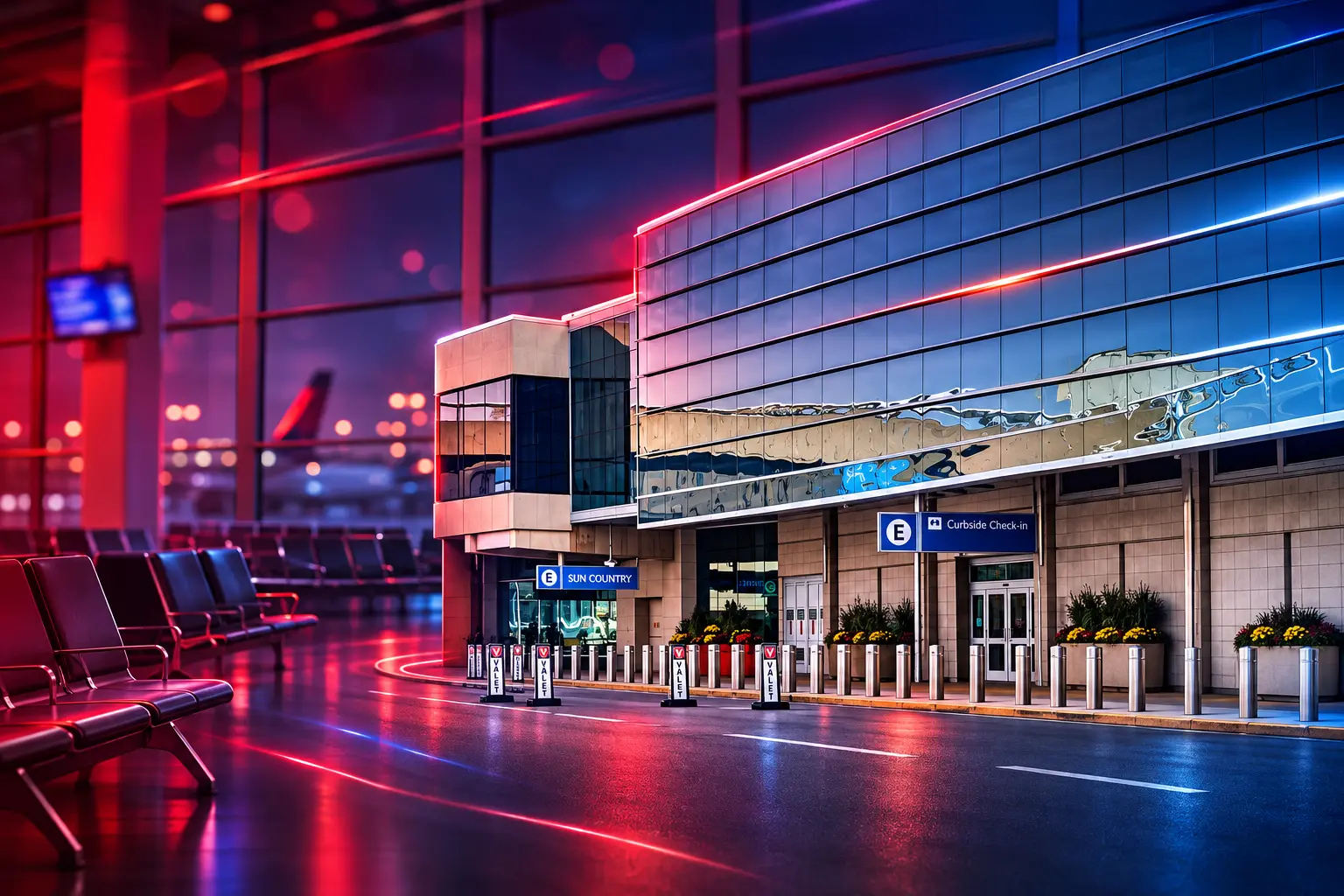
The FAA ordered the halt as a caution move after the data went inconsistent, then held it until the network looked stable. Departures were frozen while inbound flights were handled one by one. Duffy said critical medical, law-enforcement, and military flights kept moving.
THE NOVEMBER 13 CLOCK
- November 13, 2026, about 3:30 p.m. ET: The FTI network begins flooding and 17 of 22 en-route centers report unstable radar and radio.
- November 13, 8:15 p.m. ET: The nationwide ground stop is lifted after more than four hours. More than 8,000 flight operations restart that night.
- November 14, 2026: Duffy and Bedford brief on the copper-to-fiber work, and L3Harris says it is supporting the inquiry.
- November 17, 2026: Duffy, Bedford, and budget director Russ Vought send Congress a $50.1 billion request to finish a new control system.
Emily Brown and her 14-year-old daughter waited more than four hours in Dallas for a flight to Columbus, Ohio, then gave up on a trip the teenager had paid for herself. Ruth Coles sat on a plane for more than five hours after landing at Los Angeles from Newark, waiting for a gate. Corbyn Wascher, a 37-year-old teacher, spent four hours on the tarmac in Charlotte, then paid $100 for an Uber to a hotel 25 minutes away when he could not rebook that night.
College football desks scrambled in the same window. Auburn’s team took a bus to Mississippi State and kicked off at 4:15 p.m. ET instead of noon. Duffy told NCAA programs to call the FAA if they needed a Saturday flight moved up the list.
Three Ground Stops, Two of Them This Decade
A true nationwide halt of U.S. departures is rare. Flightradar24 reminded readers during the outage that the FAA had done it on September 11, 2001, and again on January 11, 2023, when the Notice to Air Missions system failed. November 13 was the third.
THE THREE NATIONWIDE STOPS
| Date | Trigger | How long departures stopped | What followed |
|---|---|---|---|
| September 11, 2001 | Terror attacks | Days, with airborne planes ordered to land | Airspace closed as a security action, not a network fault |
| January 11, 2023 | NOTAM database failure | About 90 minutes from roughly 7:30 to 9 a.m. ET | About 1,300 cancellations; contractors later said files were deleted during a database sync |
| November 13, 2026 | FTI data flood during a copper-to-fiber router swap | More than four hours, about 3:30 to 8:15 p.m. ET | 12,462 cancellations that Friday, 9,082 of them at major airlines, not all tied to the halt |
The 2023 stop paused departures while airplanes already up kept flying. Friday’s halt was longer, and it hit the radios and radar that controllers use to talk to those airplanes. Arroyo noted the difference from 2001 as well: crews were not told to land at the nearest field, and many could still reach local towers even while the en-route picture went bad.
Congress Gets a $50.1 Billion Follow-Up Ask
Congress put $12.5 billion into a first phase of the Brand New Air Traffic Control System in July 2025. Duffy had already asked for about $30 billion more, including a $30.1 billion letter on November 12. Four days after the halt, the ask rose to $50.1 billion.
The November 17 letter, signed by Duffy, Bedford, and Vought, split that sum five ways and tied the urgency to the outage.
WHAT THE $50.1 BILLION WOULD BUY
- Digital architecture: $10.1 billion for controller separation tools, tougher telecom, and traffic-flow software.
- Airports: $10 billion to overhaul airport infrastructure, plus $10 billion for aging terminals.
- En-route centers: $10 billion to build five new consolidated centers in place of the current 22, the last of which went up in 1969.
- Towers: $10 billion to build or fix as many as 140 FAA towers.
The department says the $12.5 billion is allocated and due to be in place by the end of 2028, and that it cannot legally shift money from one workstream to another. Progress it lists from that first check includes Surface Awareness screens at 143 towers, 469 radio sites converted, electronic flight strips at 25 towers, 224 IP voice switches, 18 tower simulators, nine surface-movement radars, and five facilities moved off floppy disks.
L3Harris said it has finished more than 70 percent of the planned conversion from copper to fiber, working with phone companies and the FAA, and that it is helping the investigation. A 2024 Government Accountability Office review found that more than 75 percent of the FAA’s 138 air traffic control systems were unsustainable or potentially unsustainable. Bedford’s point still stands beside that: the country is spending a billion dollars a year to keep a 1980s analog net on life support while it tries to replace it.
Duffy used the Saturday briefing to argue that the halt was a reason to fund a full rebuild rather than keep patching. He also said similar failures can happen again on the old plant.
NOW: Air travel update from USDOT HQhttps://t.co/mbCWxKPm6O
— Secretary Sean Duffy (@SecDuffy) November 14, 2026
What a Canceled Ticket Still Pays You
If an airline canceled your flight and you do not want the new seat it offers, federal rules give you a refund of the ticket price, including taxes and unused extras such as seat fees, even on a nonrefundable fare. The cause of the cancel does not matter. A ground stop counts the same as weather.
That refund is the federal floor. It is not a hotel, a meal, or cash for lost time. When the delay sits outside the airline’s control, carriers do not have to pay those extras, though some still offer them as a courtesy.
WHAT THE RULE GIVES YOU
- Cash back: Fare, taxes, and unused add-ons return to the original form of payment if you refuse the rebooking and any voucher.
- Significant delay: A domestic arrival 3 hours or more late, or an international arrival 6 hours or more late, is treated as a significant change if you choose not to fly.
- Timing: Direct airline bookings that qualify are supposed to refund automatically; card refunds are due in 7 business days, other payments in 20 calendar days.
Airline waivers published after November 13 let some travelers move dates without a change fee, with windows that closed well before November 26. Those waivers are extra, not a substitute for the cash refund if you simply want out.
Thanksgiving Week Opens With the New Routers Off
AAA projects that 81.5 million Americans will travel at least 50 miles from home between November 24 and November 30, a 0.1 percent dip from 81.6 million a year earlier, or about 121,000 fewer people. Of those, 5.96 million are expected on domestic flights, down 0.2 percent. Duffy and Bedford said after the halt that traffic should be back to normal well before that rush.
The FAA’s own fix for the flood was to kill the broadcasting function on the Juniper routers that started it, then disable the same function on more than 60 other Juniper boxes and pause putting more of them in. The analog TDM network those routers were meant to prop up is still the one carrying airplanes. Bedford called it the 1G system.
So the cutover designed to keep old copper alive is the event that stopped the country, and the replacement boxes are now sitting dark for the busiest week of the year. The $50.1 billion rebuild, if Congress funds it, is scheduled in years, not in time for November 26. Holiday flights will move on the same analog plant that took the 1,000-hit flood, with the new routers’ broadcast function switched off and the next cutovers on hold.
Frequently Asked Questions
How Long Did the November 13 Nationwide Ground Stop Last?
The FAA reported technical trouble at about 3:30 p.m. ET and lifted the nationwide order at 8:15 p.m. ET, a span of 4 hours and 45 minutes. Some radio frequencies and radar feeds stayed usable the whole time, which is why the agency describes it as instability rather than a total blackout, and why inbound international flights were handled case by case instead of being turned away as a block.
Did a Cyberattack Cause the FAA Ground Stop?
The FAA said it has no indication of a cyberattack or an outside actor. SMART, the agency’s airspace data aggregator, is not plugged into the STARS or ERAM control systems and was not the source; Duffy said all of the new equipment already fielded under the 2025 funding stayed up, including upgraded towers.
Do I Get a Refund If My Flight Was Canceled in the Ground Stop?
Yes, if you decline the airline’s alternative flight and any travel credit. The Department of Transportation’s refund rule, in force since October 28, 2024, covers flights to, from, and within the United States and does not require the airline to have caused the halt; hotels, meals, and cash for lost hours are not part of that federal refund.
When Was the Last US Nationwide Ground Stop Before November 2026?
January 11, 2023, when the Notice to Air Missions system stopped updating and the FAA paused domestic departures for about 90 minutes. Investigators later traced that failure to contract staff who unintentionally deleted files while trying to sync a live database with a backup, and the agency reported no cyberattack then either.

The Fiber Swap Behind the FAA Nationwide Ground Stop

Skeyes Strike Grounds Brussels and Charleroi for 14 Hours

Australia Adds 120 Farm Days, Except for UK Backpackers

Lufthansa Cuts 1,000 Hub Jobs to Shield Group Profit

The Malpensa Strike Hits the Unprotected Afternoon Hours

United Folds Newark’s Lima Nonstop Into Its Houston Hub

Flight Cancellations Rise While the FAA Shrinks Staffing Targets

Airbnb’s 6% Direct Links Undercut the Host Website Pitch

United Bets the A321XLR on 10 New International Cities

Hitachi’s Aurora Faults Drove the EMR Bank Holiday Strike
-
 AIRLINES3 months ago
United Folds Newark’s Lima Nonstop Into Its Houston Hub
-
 AIRLINES3 months ago
Flight Cancellations Rise While the FAA Shrinks Staffing Targets
-
 HOTELS3 months ago
Airbnb’s 6% Direct Links Undercut the Host Website Pitch
-
 AIRLINES3 months ago
United Bets the A321XLR on 10 New International Cities
-
 NEWS3 months ago
Hitachi’s Aurora Faults Drove the EMR Bank Holiday Strike
-

 HOTELS3 months ago
Grand Canyon Hotels Close After a Repeat Pipe Flood
-

 NEWS3 months ago
The EU Pulled the 2026 ETIAS Date After Border Chaos
-

 NEWS3 months ago
Brussels Closed the EES Pause as Kiosks Keep Failing