
AIRLINES
Skeyes Strike Grounds Brussels and Charleroi for 14 Hours
Skeyes is closing Belgian airspace for 14 hours on 23 November, cancelling 327 passenger flights at Brussels Airport and grounding Charleroi with it.

Skeyes is halting regular air traffic control across Belgium from 07:00 to 21:00 on 23 November, grounding commercial flights at Brussels Airport and Charleroi. The air navigation body told airports on Saturday, 21 November, that a group of controllers would join a national protest against federal budget cuts, with too few qualified staff left to handle normal traffic safely. A Brussels Airport spokesman said 327 passenger flights and 37 cargo flights, about 85 percent of Monday’s programme, are cancelled, and about 51,000 travelers cannot fly.
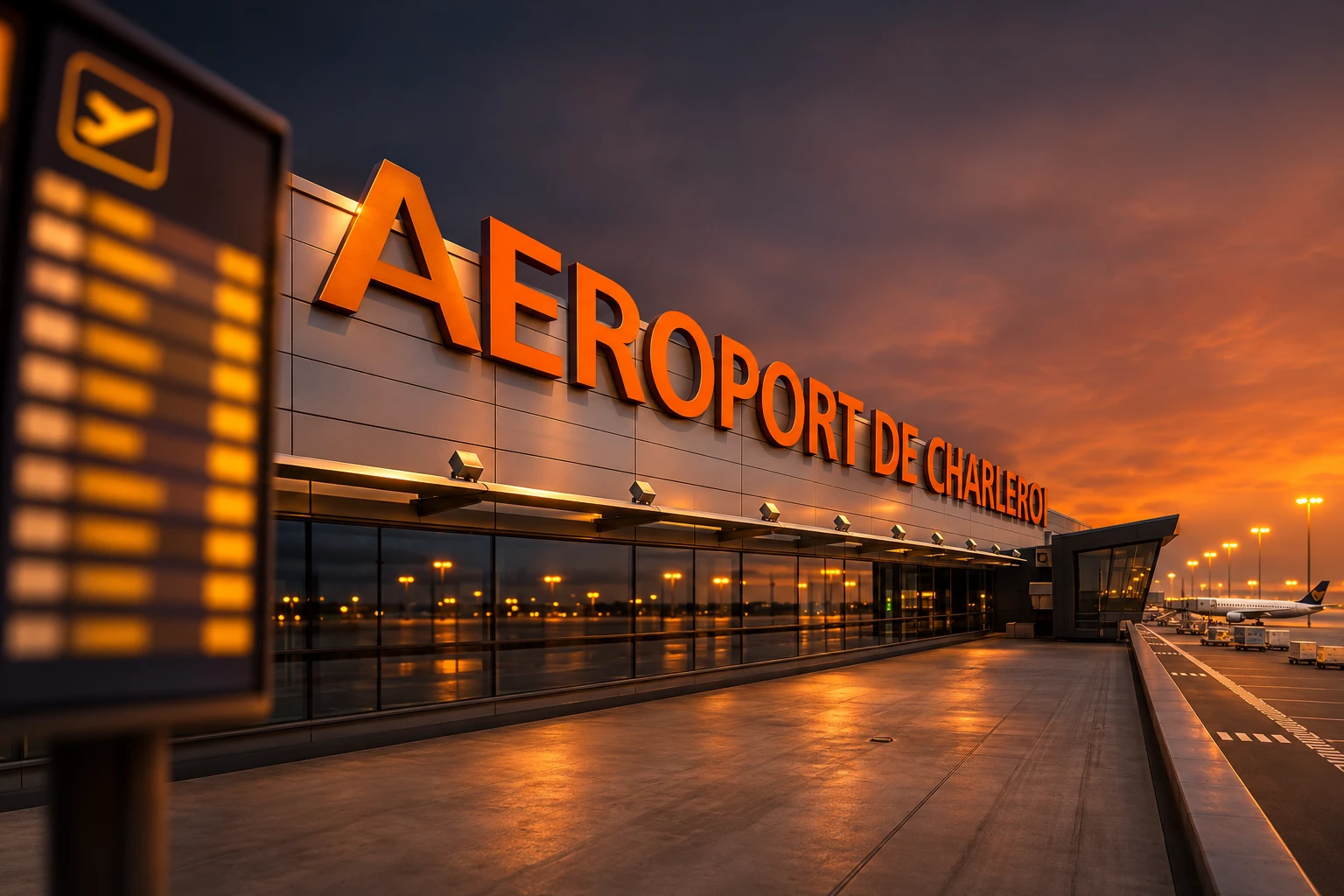
Charleroi, a Ryanair base, has stopped takeoffs and landings in the same window even though it had rostered its own people to work. Only emergency and other safety-critical flights keep a minimum service.
Skeyes Is Closing Belgian Airspace for 14 Hours
The cut is not a gate closure at Zaventem. Skeyes is the state company that controls Belgian airports and the airspace around them, and it said staffing on 23 November would not let it handle regular traffic under safe conditions, so it is pausing the services concerned for 14 hours, from 07:00 to 21:00 local time (06:00 to 20:00 UTC).
The anticipated staffing levels will not allow the safe handling of regular air traffic to be guaranteed during this period. Skeyes is therefore obliged to temporarily suspend the services concerned.
skeyes, press statement, 21 November 2026
That pause covers Brussels, Charleroi, Antwerp, Kortrijk, Liège and Ostend. Kurt Verwilligen, a skeyes spokesman, said unions had given no sign that controllers would join the protest, and that the first notice reached the company on Saturday morning. Controllers hold specific qualifications for specific positions, he said, and they cannot be swapped in at short notice.
Belgium’s main trade unions called the day of action against spending and labour plans under Prime Minister Bart De Wever, whose coalition has been trying to lock in about €10 billion (about $11 billion) of savings over the coming years. Union notices say households are being squeezed by rent, energy, fuel, public transport, school fees and food. Controllers are walking out with that wider protest, not over a separate aviation dispute, which is why airlines spent weeks planning for a quiet Monday and then lost the sky on a Saturday afternoon.
51,000 Passengers Lose the Day at Brussels Airport
Brussels Airport had expected about 59,500 passengers on 429 flights between 06:00 and 22:00. The cancelled block is the 07:00 to 21:00 window. Flights booked between 06:00 and 07:00, and between 21:00 and 22:00, are still expected to operate.
MONDAY’S GROUNDED PROGRAMME
| Airport | Window | What stops |
|---|---|---|
| Brussels Airport | 07:00-21:00 | 327 passenger flights and 37 cargo flights cancelled, about 51,000 people who cannot fly |
| Brussels Airport | 06:00-07:00 and 21:00-22:00 | Still expected to operate |
| Charleroi | 07:00-21:00 | No takeoffs or landings |
| Antwerp, Kortrijk, Liège, Ostend | 07:00-21:00 | skeyes regular service paused |
Joëlle Neeb, spokeswoman for Brussels Airlines, said about 25,000 of those 59,500 passengers had been booked with her airline. She said every long-haul flight is cancelled, along with most of the European schedule, with a few arrivals possible after 21:00. TUI fly Belgium is cancelling three flights. In October, transfer passengers made up 13 percent of people leaving Brussels Airport, so a share of Monday’s mess is connections that never reach a second boarding pass.
Airlines are supposed to message customers directly. Cancellations show on the airport’s flight information pages only after each carrier registers them, which is why people asking for a clean Monday list on Saturday evening were told to wait on their airline, not the terminal screens.
Charleroi Had Staff Ready and Nowhere to Fly
Brussels South Charleroi Airport said it had staffed the terminal to keep operating, while still allowing employees who wanted to join the protest to do so. Then skeyes said air traffic control would not be available. Without that service, the airport said, no aircraft can take off or land. It told passengers not to come to the terminal unless their airline had confirmed the flight.
Management said skeyes gave it less than 36 hours’ warning, after the airport had prepared for a normal Monday, and it accused controllers of a “completely cavalier attitude” toward airlines, passengers and the about 3,400 people who work on the platform. It called the result a last-minute decision with disastrous consequences and asked Belgian authorities for a coordinated plan so repeated shutdowns do not keep eroding confidence in Belgian aviation. Charleroi described the day as a complete shutdown of the country’s airports. Ryanair’s Belgian base sits in that freeze with everyone else.
Why the Notice Landed on Saturday Afternoon
The national protest itself was not a surprise. Aviation companies had spent weeks trying to judge what 23 November would do to the airports. Brussels Airlines said that until a few hours before the skeyes notice, “the expected impact on operations at Brussels Airport was almost nil.” The airline said it “deeply regrets the extremely late communication.” Neeb said the fight is not with the right to strike, it is with a warning so late that telling thousands of passengers and finding them other seats becomes a brutal puzzle.
#UnionAction 23 November ⚠️ The majority of the flights on that day will unfortunately be #cancelled due to the participation of some skeyes air traffic control staff in the national demonstration. Public transport to/from #brusselsairport will be affected as well. We apologise… pic.twitter.com/ybSVFsjUDd
— Brussels Airport (@BrusselsAirport) November 21, 2026
Brussels Airport’s first public post on Saturday still spoke of a majority of flights being cancelled, and of public transport to and from the airport being hit as well. By Sunday evening the airport’s own count was the 327 passenger flights, the 37 cargo flights and the 51,000 people who cannot fly.
HOW THE WEEKEND BROKE THE SCHEDULE
- Saturday morning, 21 November: skeyes gets its first notice that some controllers will join Monday’s protest.
- Saturday afternoon, 21 November: the company tells airports it cannot guarantee regular control from 07:00 to 21:00; Brussels Airport warns passengers.
- Sunday, 22 November: Brussels Airport confirms the cancelled window in numbers; Charleroi keeps a full stop on takeoffs and landings; Neeb is still rebooking.
- Monday, 23 November, 07:00-21:00: regular skeyes services stay down except for emergency and safety-critical flights.
- Friday, 27 November: Mobility Minister Jean-Luc Crucke plans to take a minimum-service bill for skeyes to the Council of Ministers.
Crucke said on Sunday that he regretted the strike. The right to strike matters, he said, but it must still be possible to keep essential services running and to limit the harm to travelers. skeyes and the airline group BAR Belgium have been asking for that legal floor as well.
Eleven Airspace Strikes in Eleven Months
BAR Belgium, which speaks for about 25 airlines including Brussels Airlines and TUI fly Belgium, called Monday’s walkout the 11th strike to hit Belgian airspace in 11 months. It labelled the pattern excessive, irresponsible and totally disproportionate, and said Belgium’s standing as a reliable place to fly is now in question.
After eleven airspace-related strikes in as many months, any notion of exceptional action has disappeared.
BAR Belgium, statement, 21 November 2026
Those 11 hits mix national protest days with skeyes-only actions, including night walkouts at Charleroi earlier in the year. They are a broader tally than the airport’s own count of national trade union days. Brussels Airport said a 9 October action already cancelled 105 flights and around 12,000 passengers, the third such national day that year to dent operations, and still finished October with 2,270,528 passengers, up 1.9 percent. A mid-year airport note put two earlier national days in March and May at about 55,000 passengers together, and a spontaneous skeyes strike on 2 June at about 25,000.
Neeb would not put a price on 23 November. She said seven national actions last year cost Brussels Airlines €15 million, and that this year’s four national demonstrations up to 22 November will cost several million more. The larger leak, she said, is trust: each stoppage pushes travelers toward northern France or the Netherlands.
Trains Still Run, but Buses and Metro Thin Out
Getting to an airport that cannot launch aircraft is its own problem. Brussels Airport warned that public transport to and from the terminal would be disrupted. The capital’s STIB/MIVB network is running fewer metros, trams and buses all day, and lines that cross the march will be diverted or cut while the column is on the streets.
GROUND LINKS ON 23 NOVEMBER
- The march: Demonstrators gather at Brussels-North from 10:00 and move at 11:00 along the inner ring toward Brussels-Midi.
- City roads: Police expect traffic trouble in the centre from 09:00 to 15:00, with boulevard du Jardin Botanique closed from 09:00 and the Reyers and Cinquantenaire tunnels from 10:00.
- De Lijn: About 4 in 10 Flemish buses and trams do not run; by province, about 54 percent of trips run in Antwerp and Flemish Brabant, 64 percent in Limburg, 67 percent in East Flanders and 68 percent in West Flanders.
- SNCB/NMBS: National rail reports no strike and expects trains to run, though services into Brussels-North and Brussels-Midi will be packed.
A rail ticket is still a way to leave the country if an airline can rebook you onto Amsterdam, Lille or Paris. It is a poor way to reach a departure gate that has already been wiped from the board.
What Cancelled Passengers Can Still Claim
Under EU air passenger rules, a cancelled flight still gives you a choice of reimbursement, re-routing or a later flight, plus care at the airport. Cash compensation is a separate fight. Airlines commonly treat an air traffic control strike as an extraordinary circumstance, which is the legal hook they use to refuse the €250 to €600 payment, and the 2026 update of those rules still lists air navigation strikes among events that sit outside the airline’s control. Duty of care does not vanish with that argument. If you are stuck, keep receipts for food and a hotel.
Check the airline app before you leave home. Charleroi and Brussels Airport both said carriers would offer rebooking or refunds, and both told people not to travel to the terminal on a hope. The people who still have a seat are the ones on those thin shoulder-hour flights, and even they have to cross a city in the middle of a march.
Neeb’s warning is the one that will outlast Monday evening. Each time skeyes goes dark, some of those 51,000 people will not come back through Zaventem. They will try Schiphol, Lille or Charles de Gaulle on the next trip, and Belgian airspace will have taught them the route.
Disclaimer: This article is news reporting on a transport disruption and on published passenger-rights rules. It is informational only and is not legal advice, a claim assessment, or a promise that any airline will pay compensation, offer a particular reroute, or accept a given receipt. Readers who want to enforce a claim under EU air passenger rules should check their booking with the operating airline and, if needed, consult a qualified passenger-rights lawyer or the national enforcement body in the country where the flight was due to operate. Figures, strike windows and board statuses reflect the company and union notices available on 23 November 2026 and can change as airlines refile flights.

The Fiber Swap Behind the FAA Nationwide Ground Stop

Skeyes Strike Grounds Brussels and Charleroi for 14 Hours

Australia Adds 120 Farm Days, Except for UK Backpackers

Lufthansa Cuts 1,000 Hub Jobs to Shield Group Profit

The Malpensa Strike Hits the Unprotected Afternoon Hours

United Folds Newark’s Lima Nonstop Into Its Houston Hub

Flight Cancellations Rise While the FAA Shrinks Staffing Targets

Airbnb’s 6% Direct Links Undercut the Host Website Pitch

United Bets the A321XLR on 10 New International Cities

Hitachi’s Aurora Faults Drove the EMR Bank Holiday Strike
-
 AIRLINES3 months ago
United Folds Newark’s Lima Nonstop Into Its Houston Hub
-
 AIRLINES3 months ago
Flight Cancellations Rise While the FAA Shrinks Staffing Targets
-
 HOTELS3 months ago
Airbnb’s 6% Direct Links Undercut the Host Website Pitch
-
 AIRLINES3 months ago
United Bets the A321XLR on 10 New International Cities
-
 NEWS3 months ago
Hitachi’s Aurora Faults Drove the EMR Bank Holiday Strike
-

 HOTELS3 months ago
Grand Canyon Hotels Close After a Repeat Pipe Flood
-
 NEWS3 months ago
The EU Pulled the 2026 ETIAS Date After Border Chaos
-

 NEWS3 months ago
Brussels Closed the EES Pause as Kiosks Keep Failing