
NEWS
China’s 10-Day TWOV Makes a Three-City Loop Legal
China’s 240-hour transit stamp legally covers Beijing, Zhangjiajie and Chongqing, but airline clerks and a side immigration window still decide if you board.

A Beijing, Zhangjiajie and Chongqing trip from November 15 to 24 fits China’s 240-hour visa-free transit window, with a day left on the clock. The flights and trains are ordinary. The people who can still stop you are an airline clerk at origin and a side window at Beijing Capital, not a mountain timetable.
Call the stamp by its real name at every desk: Transit Without Visa, or TWOV. It is a temporary entry permit issued on the spot. It is not a visa sticker, and the word “visa” is how check-in staff start hunting for a page that is not there.
It Is Not a Visa at All
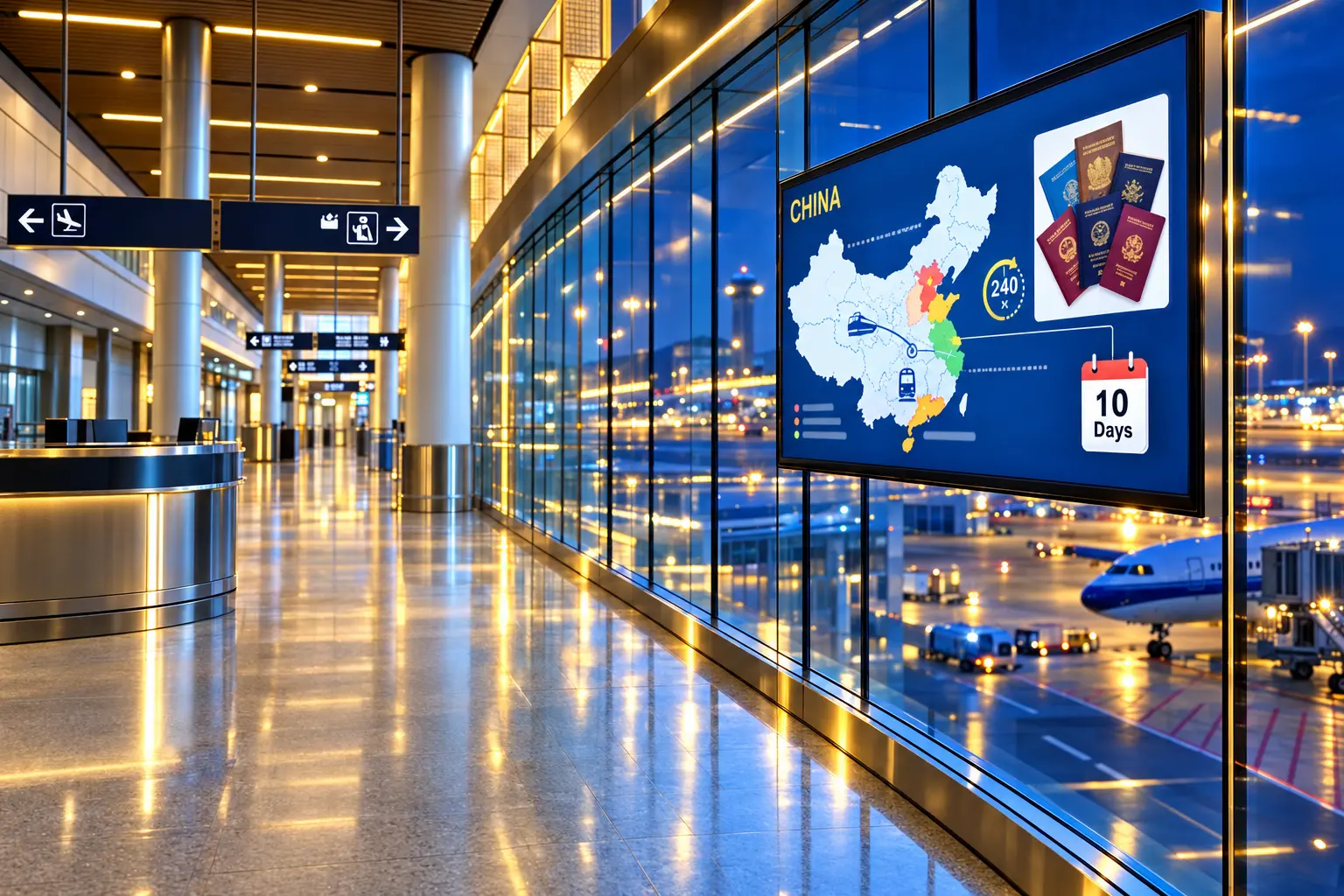
China’s National Immigration Administration extended visa-free transit stays to 240 hours on December 17, 2024, folding the old 72-hour and 144-hour stamps into one 10-day permit. That notice added 21 ports, including Zhangjiajie Hehua, and raised the open list from 39 ports to 60. It also let holders move across 24 provincial-level regions instead of one city cluster.
Five more Guangdong ports came in on November 5, 2025, which took the map to 65 ports across 24 provincial regions. Kyrgyzstan and Vietnam joined on August 20, 2026. Beijing Capital’s own account now puts the nationality count at 57 countries.
China’s 240-hour visa-free transit policy now covers 57 countries. Since Aug 20, 2026, citizens of Kyrgyzstan and Vietnam have been eligible for the policy, making transit through Beijing Capital International Airport even more convenient. pic.twitter.com/ZZFRxiALGA
— Beijing Capital International Airport (@PEKAirport) September 1, 2026
Hunan is fully inside the stay zone, and the English port list names Zhangjiajie Hehua International Airport next to Changsha. Chongqing Jiangbei is on the same list. So is Beijing Capital and Beijing Daxing. A traveler can enter at PEK, fly to Zhangjiajie, take the train to Chongqing, and leave from CKG without a tourist visa, as long as the passport is eligible and the onward ticket is real.
THE STAMP’S RECENT CHANGES
- December 17, 2024: Stay length moves to 240 hours, ports rise from 39 to 60, and cross-province travel inside 24 regions is allowed.
- November 5, 2025: Five South China ports join, taking the total from 60 to 65.
- August 20, 2026: Kyrgyzstan and Vietnam join, taking eligible nationalities to 57.
Work, study and news reporting still need a proper visa. Tourism, business visits and family visits are what the stamp is built for. The NIA advice line is 12367 if a desk and a printed notice disagree.
Print the Rules Before You Reach the Counter
The first refusal is almost never in Beijing. It is at origin check-in, where a departure-control screen still asks for a Chinese visa and throws a do-not-board flag when the passport is empty. Chinese carriers see this routing every day. Western desks often do not. Supervisors then have to pull Timatic, call an immigration desk, and stare at a third-country ticket that is not on the same PNR as the inbound flight.
Arrive early. Budget a quarter of an hour of confusion as normal, not as a crisis. Ask for the supervisor before anyone cancels the bag tag. Keep the language exact: TWOV, 240-hour visa-free transit, 过境免签. Do not say “transit visa.”
Paper still beats a phone when a queue is moving. Screens lock, brightness dies, and a clerk who has never seen the stamp wants something they can hold.
WHAT TO PUT ON PAPER
- Passport window: Beijing’s English FAQ asks for a travel document valid at least three months, plus an onward ticket with a confirmed seat to a third country or region inside 240 hours.
- The NIA notice: Print the December 2024 text that names Zhangjiajie Hehua and says holders may travel across the 24 allowed regions, because some domestic desks still think the old one-city cage applies.
- Hotels and trains: Print every booking, including the Beijing-Zhangjiajie flight and the Zhangjiajie-Chongqing train, so the route looks like a planned transit, not a guess.
- The exit flight: Show the Chongqing departure to a different country or region, with a date and a seat, not an open ticket and not a hope to buy later.
Chongqing’s exit-entry bureau still wants a temporary stay reported to local police after you check into a hotel. That is a separate chore from the airport stamp, and it is easy to forget on a three-city dash.
A Nov. 15 Arrival Leaves Room Until Nov. 25
The clock does not start when the wheels hit the runway. Beijing’s FAQ is blunt: the stay is counted from 00:00 the day after you enter. Chongqing’s public-security FAQ works the same math, with a stay counted from midnight after arrival and an exit due before 24:00 on the tenth day.
Land on the morning of November 15 and the formal count begins at 00:00 on November 16. Ten days from that midnight run through November 25, 24:00. Flying out of Chongqing on November 24 leaves a full spare day, which is the right kind of slack when a domestic flight or a mountain cable car dies in bad weather.
November 15 to 24 is 10 calendar days and 9 nights. Split as three nights in each city, the math is even. The days on the ground are not.
THE NINE-NIGHT LOOP
| Stop | Nights | How you move | Time on the move |
|---|---|---|---|
| Beijing | November 15 to 18 | Land at Capital or Daxing | Arrival morning, then city time |
| Zhangjiajie | November 18 to 21 | Domestic flight from Beijing | About 2.5 hours |
| Chongqing | November 21 to 24 | High-speed train from Zhangjiajie West | 2 to 3.5 hours, about 650 km |
| Exit | November 24 | International flight from Jiangbei | Must leave before November 25, 24:00 |
A morning arrival on November 15 can still buy a Wall morning and a Forbidden City afternoon if jet lag cooperates. Leaving on November 18 for Zhangjiajie spends that day in terminals. The two full park days in Hunan are November 19 and 20, and Chongqing’s two full city days are November 22 and 23. That is a first-time China loop, not a slow one.
Zhangjiajie Takes Two Full Park Days
The “Avatar mountains” and Tianmen Mountain are not the same ticket and not the same hill. Wulingyuan, the quartz-sandstone pillars most people mean when they say Avatar, sits in the national forest park north of town. Tianmen is a separate 1,519-meter peak above Zhangjiajie city, about 40 km and an hour away. Each is a full day. Same-day stacking is how people see fog, queues and a bus window.
November is late autumn there, cooler than the city and often clearer than summer, with thinner crowds than October’s holiday week. Timed entry is now the norm at both parks. Walk-up tickets are a bad bet. Book slots before you fly, and keep a screenshot on paper too.
Visitor guides updated through 2026 describe the upper section of the main Tianmen cableway as closed for renovation since November 2025, with a bus on the 99 Bends road filling the gap. Plan Tianmen as a hybrid climb, not the old unbroken 30-minute ride from downtown. If that closure is still in force in November, the day gets longer, not shorter.
A TIGHT TWO-PARK SPLIT
- November 18: Fly Beijing to Hehua, check in near Wulingyuan if the forest park is day one, and do not try to see a mountain after a 2.5-hour hop.
- November 19: Full day in Wulingyuan for Yuanjiajie, the Bailong Elevator if you want it, and Golden Whip Stream. Start at opening, because cable cars stop new riders in the late afternoon.
- November 20: Move hotels toward Zhangjiajie city and spend the day on Tianmen, including Heaven’s Gate and the glass walkway. Last entry is often around 16:00.
- November 21: Train to Chongqing. Direct high-speed runs from Zhangjiajie West take 2 to 3.5 hours and leave through the day, so a morning departure still yields an afternoon in the city.
Four nights would be kinder. The 240-hour cap is what forbids that once Beijing and Chongqing are also on the list. Cut one park before you cut sleep. A rushed Tianmen plus a fogged Wulingyuan is how the middle city becomes a photo of a queue.
Where to Stand at Beijing Capital
Do not join the main foreigner line for ordinary visas when you land. That queue is for people who already have a sticker, or who are entering under the 30-day visa-free stamp. TWOV is processed as a temporary entry permit at a separate counter. Follow signs for visa-free transit or 过境免签. Some halls still say landing permit or temporary entry. Staff at the front of the ordinary line will send you back if you wait there by habit.
Have the onward Chongqing ticket, the hotel list and the arrival card ready before you reach the glass. Officers can ask purpose, hotel and exit flight. They decide on the spot. Beijing’s FAQ says as much: the application is finished through an on-site review, and the permit is issued there, not in an embassy.
Once that stamp is in the passport, domestic air and high-speed rail inside the 24 regions are allowed. That is the whole point of the December 2024 rewrite. Bring the printed NIA text onto the Beijing-Zhangjiajie flight anyway. A domestic agent who learned the job under the old 144-hour city cage can still freeze at a passport with no visa page.
Jiangbei’s T3 hall is where Chongqing processes the same permit for people who enter there. You will use that hall on the way out, not in, if the plan is Beijing first. Keep the exit ticket handy at departure too. Overstay is a police matter, not a cute delay.
The Third Country Cannot Be the One You Left
TWOV is transit in the legal sense. The inbound country and the outbound country or region have to differ. Hong Kong, Macao and Taiwan count as separate destinations from the mainland, which is why a Beijing-to-Hong Kong exit is a standard fix. A same-country return is the classic fail: New York-Beijing-New York does not qualify, and neither does London-Beijing-London.
The onward seat has to exist before you check in for China, not after you land. Open tickets and “I will buy it in Chongqing” are how people get walked back to the ticket desk at origin. A U.S. routing that wants to go home after China has to insert a third place, Tokyo or Seoul or Hong Kong, because a straight return to the United States is not transit. Families already do this as a bolt-on hop, then fly home from there.
The visa-free stay period is counted from 00:00 the day following the day of your entry. During your stay period, you may engage in activities such as tourism, business, visits, or family reunions.
Beijing Municipal Government, 240-hour visa-free transit FAQ
Chongqing’s own FAQ uses a worked example that matches that rule: enter on December 19, start the count at 00:00 on December 20, and leave before 24:00 on December 29. Swap in November 15 and you get the same spare day on November 24. Do not spend it. Weather on Tianmen and a missed domestic flight are how spare days get used.
Who Still Needs This Stamp in 2026
Plenty of passports on the 57-country TWOV list no longer need it. China also runs a separate 30-day visa-free stay for dozens of nationalities, with no third-country ticket and no 10-day cap. Chongqing’s exit-entry bureau already tells those travelers to use the 30-day stamp instead, and names Australia, France and South Korea as examples. If your passport is on that list, book Beijing, Zhangjiajie and Chongqing as a normal trip and skip the transit theater.
The United States is still named on the 240-hour nationality list, which is why this loop is a live product for American passports. Mexico is on that list too. The third-country ticket is the price of admission. So is the paper stack at check-in. So is the side window at Capital, where the main line will bounce you if you stand in it because everyone else did.
A first-time run that tries to do the Wall, two Hunan parks and Chongqing hotpot in 9 nights will work on a calendar and feel tight on the ground. Keep the parks to two full days, keep the exit a day inside the clock, and treat the airline clerk as the officer who matters first. The mountains only count after the boarding pass prints.
Disclaimer: This article is news reporting on China’s visa-free transit rules and a sample November itinerary, and it is for information only. It is not legal advice, visa advice, or a promise that any airline or border officer will board or admit you. Passport lists, port lists and airline Timatic settings change, and the final decision is always made at check-in and at the port. Confirm the current rules with the Chinese embassy or consulate that covers your home country, and with your airline, before you buy tickets or rely on a 240-hour stamp.

Ibiza Airport Flooded as Storm Adam Broke a 2005 Record

The Louvre Is Closed as France Runs Neighbourhood Curfews

UK Tells Travellers to Leave Saudi Arabia by Land

Southwest’s Record Fares Lose Ground to $4.55 Fuel

Leeds Bradford Airport Pauses Half-Term Strikes After Rejections

Flight Cancellations Rise While the FAA Shrinks Staffing Targets

United Folds Newark’s Lima Nonstop Into Its Houston Hub

Airbnb’s 6% Direct Links Undercut the Host Website Pitch

Hitachi’s Aurora Faults Drove the EMR Bank Holiday Strike

United Bets the A321XLR on 10 New International Cities
-
 AIRLINES2 months ago
Flight Cancellations Rise While the FAA Shrinks Staffing Targets
-
 AIRLINES2 months ago
United Folds Newark’s Lima Nonstop Into Its Houston Hub
-
 HOTELS2 months ago
Airbnb’s 6% Direct Links Undercut the Host Website Pitch
-
 NEWS2 months ago
Hitachi’s Aurora Faults Drove the EMR Bank Holiday Strike
-
 AIRLINES2 months ago
United Bets the A321XLR on 10 New International Cities
-

 NEWS2 months ago
The EU Pulled the 2026 ETIAS Date After Border Chaos
-

 HOTELS2 months ago
Grand Canyon Hotels Close After a Repeat Pipe Flood
-
 NEWS2 months ago
ATSB Opens Six Sydney Airport Ground Conflict Files