
NEWS
Avianca Flight 42 Injuries Follow a Familiar Cabin Pattern
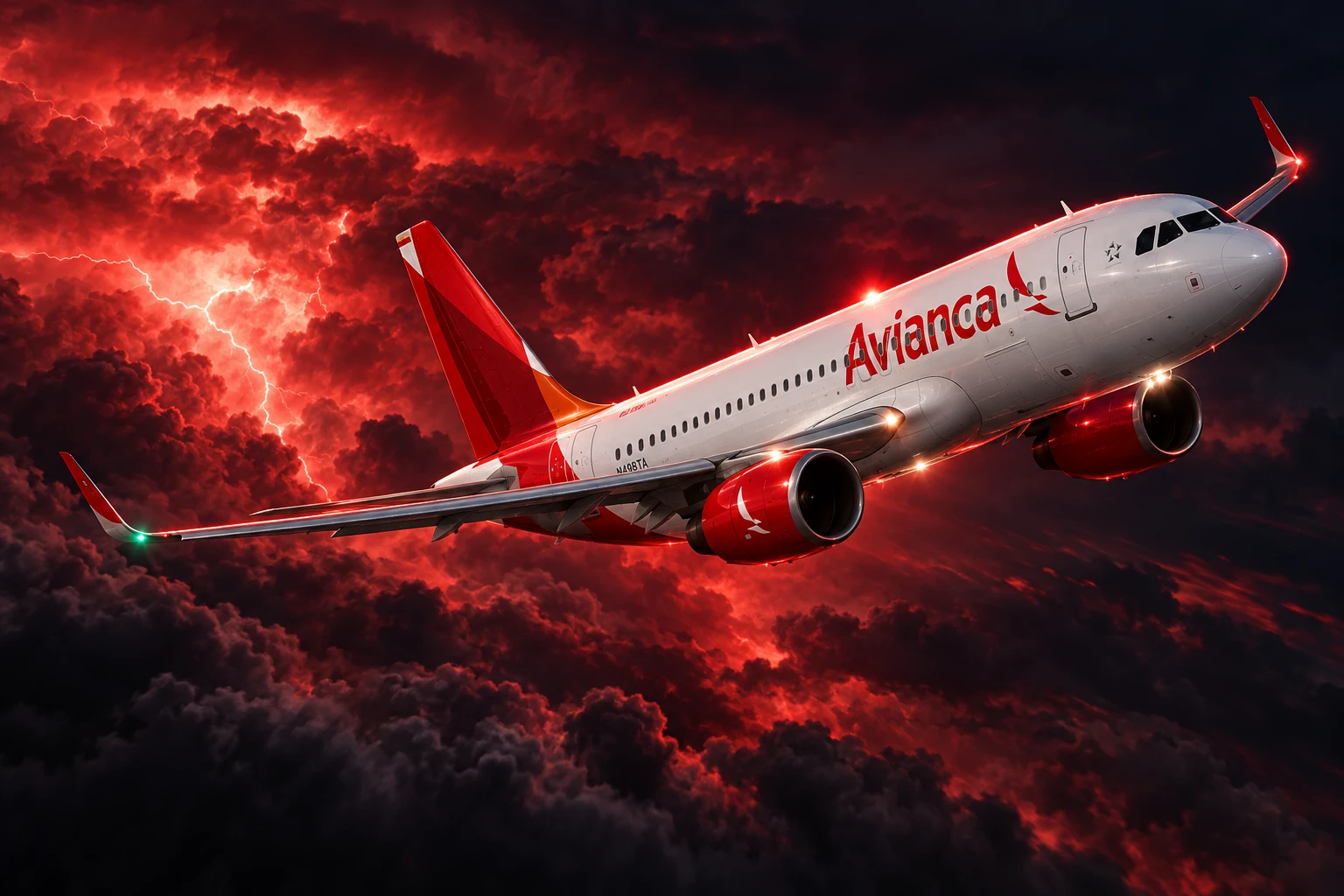
Avianca Flight 42 diverted to Miami after turbulence injured nine people, three of them cabin crew still working the aisle.

Nine people were injured early Friday, Oct. 9, after severe turbulence struck Avianca Flight 42 on its way from Medellín to New York. Three were cabin crew. Six were passengers. Miami-Dade Fire Rescue took eight of them to hospitals, one to a trauma center.
The Airbus A320, fitted for 180 passengers, had left José María Córdova International Airport at 11:22 p.m. Thursday, bound for Kennedy Airport at 5:20 a.m. Avianca called the encounter “unexpected turbulence” and sent the jet to Miami. A passenger still finishing a drink service said a flight attendant “went flying.”
Ice Packs and a Service Cart in the Aisle
Pilar, a passenger who did not give her last name, said the cabin had been quiet for a little more than an hour and a half. Flight attendants had gotten refreshments to about 80 percent of the plane, she said, and people were awake and finishing that service when the floor dropped.
We thought it was the end for us. It was incredibly intense, something I’ve never experienced in my life.
Pilar, passenger, Avianca Flight 42
She counted at least three very strong bouts. People who were not belted “went flying,” she said, and came away with cuts on their heads. Crew handed out ice. Cellphone video from the cabin shows passengers holding those packs while they are told to keep belts on.
Avianca said three cabin crew members and six passengers were affected. That split is the part of the night that matches every serious-injury file, not a footnote. The people standing up to work the aisle, and the people who had opened a belt after the drinks came, are the ones who leave a turbulence event on a stretcher.
Miami-Dade Fire Rescue said it answered “multiple patients injured by turbulence” and moved eight people by ambulance, one to a trauma center and seven to local hospitals. Avianca’s nine and the fire department’s eight are different counts. One person was hurt and not moved that way, or the airline counted someone treated on the jet.
Between Jamaica and Cuba, After Midnight
The jet had been flying north over Jamaica and Cuba at about 36,000 feet. Tracking data shows it climbed to around 36,000 feet over Cuba before the crew turned the A320 toward Miami and started down.
AccuWeather compared the track with satellite imagery and put the likely encounter between 2 a.m. and 2:30 a.m. Friday, between Jamaica and Cuba. Dan DePodwin, the firm’s vice president of forecasting operations, said thunderstorms had moved through that stretch of the Caribbean on Thursday night and could have fed the bump.
Pilots train to stay out of storms, and onboard radar sees rain. DePodwin said that picture is incomplete. When an updraft builds fast, precipitation may not have formed yet, so the radar stays quiet and the crew can read a clear cell that is already violent. Winds inside a thunderstorm also change speed and direction without a long warning.
Avianca has not said whether the seat-belt sign was on, how long the jolt lasted, or whether the crew had weather on the scope. The Federal Aviation Administration said the crew reported severe turbulence before landing and that the agency would investigate. Until that file closes, thunderstorms on the corridor are a meteorologist’s reading, not a finding.
Cabin Crew Take Most of the Serious Hits
The FAA’s own ledger of Part 121 serious turbulence injuries is blunt about who gets hurt. In 2024 it recorded 23 serious turbulence injuries in 2024, and 20 of those 23 were crew. The year before, 17 of 20 were crew. The year before that, 13 of 18.
SERIOUS TURBULENCE INJURIES, U.S. AIRLINES
| Year | Passengers | Crew | Total |
|---|---|---|---|
| 2022 | 4 | 13 | 18 |
| 2023 | 3 | 17 | 20 |
| 2024 | 3 | 20 | 23 |
Across 2009 through 2024 the same FAA table, built from NTSB reports, lists 166 serious injuries to crew and 40 to passengers. A serious injury here means a night in hospital past 48 hours, a broken bone beyond fingers, toes or nose, internal damage, or a bad burn. It is not a bruise from a bounced drink cart.
An NTSB study of turbulence accidents from 2009 through 2018 found that passengers accounted for 21 percent of serious injuries, and that nearly all of those passengers were unbelted. Flight attendants cannot stay strapped in while they run a cabin. They take the rest of the hits, often in the aft galley, often while they prepare for landing or while they still have a cart in the aisle.
That is the quieter story inside Avianca 42. Three of the nine people the airline listed were cabin crew, on a red-eye that was still serving drinks. Pilar’s “terrible drop” arrived while the cart was out. The Singapore Airlines Flight SQ321 disaster on May 21, 2024, which killed one passenger and injured 79 of 229 people on board, also struck while cabin crew were in the middle of a meal service, that time breakfast over Myanmar.
Clear-air turbulence, the kind radar cannot see, has already gotten more common on the busy tracks. A University of Reading study in Geophysical Research Letters found that at a typical North Atlantic point, annual hours of severe clear-air turbulence rose from 17.7 in 1979 to 27.4 in 2020. The United States and the North Atlantic showed the largest increases; the South Atlantic rose too. That paper does not diagnose this Caribbean night. It does explain why “unexpected” is getting easier to say.
Trackers Logged a Diversion Descent, Not a Plunge
Clips of the night spread with a second number: a drop of about 25,000 feet in minutes. The trace is real. The reading is not. After the crew had injuries in the cabin, they left cruise and went down to land at Miami International Airport. A descent to a diversion field will look like a cliff on a public tracker. It is not the same motion as the jolt that threw a flight attendant.
FlightRadar24 put the landing at about 3:25 a.m. Friday. The remaining cabin then sat in a jet that had become a medical scene. Passenger Maria Paula Jimenez said that on the way down she could see lights all over the tarmac.
“There were six or seven ambulances all lit up, and actually, our son said it looked like a light show because there were so many first responders waiting for us,” Jimenez said.
Officials did not give conditions. Head cuts and ice packs are what passengers described. One of the eight hospital runs went to a trauma center. The FAA does not treat turbulence as rare. It still calls it the leading cause of accidents among large U.S. passenger and cargo airlines, and it still tells travelers the cheap defense is a belt that stays latched after the cart goes by.
Remaining Passengers Reached Kennedy at 10:50 a.m.
Miami was the operational answer, not the destination. The original A320 stayed there for safety and maintenance checks, Avianca said. Airport staff and airline medics met the flight. The rest of the cabin was put on a replacement aircraft and sent north.
THE MEDELLÍN TO MIAMI TO KENNEDY CLOCK
- Thursday, Oct. 8, 11:22 p.m.: Avianca Flight 42 leaves Medellín for New York.
- Friday, Oct. 9, 2 to 2:30 a.m.: AccuWeather places the likely turbulence between Jamaica and Cuba.
- Friday, Oct. 9, 3:25 a.m.: The A320 lands at Miami International Airport.
- Friday, Oct. 9, 8:15 a.m.: Remaining passengers leave Miami on a replacement jet.
- Friday, Oct. 9, 10:50 a.m.: That aircraft arrives at Kennedy, 5 hours 30 minutes after the 5:20 a.m. schedule.
Avianca said it was in contact with the people who were hurt and with the crew. It also put the night in the language airlines use after a cabin is torn up.
The safety of our customers and employees is, and will remain, the foundation of our operations.
Avianca statement on Flight AV042
The FAA’s file is the part that will take longer than a same-morning ferry to New York. Investigators will want the seat-belt-sign log, the weather radar recording, any pilot reports from nearby jets, and whether anyone in the aisle had been told to sit down before the first drop. That was not public by Oct. 11, when the same account was still circulating without a cause.
What Passengers Can Do Before the Sign Comes On
Federal rules already require seat belts fastened when the sign is on, and for takeoff, landing and taxi. The FAA’s traveler page goes further than the sign. It tells passengers to keep the belt buckled whenever they are in the seat, because the air can move before a chime does. Listen to the crew. Put children in an approved seat. Keep the cabin clear of extra bags that become projectiles.
Mark Prosser, a University of Reading meteorologist who led the clear-air study, has said airlines will have to plan for more of this, because extra minutes in rough air wear the airframe and raise the chance of injuries. Paul Williams co-wrote that paper. He is an atmospheric scientist at the same university.
Following a decade of research showing that climate change will increase clear-air turbulence in the future, we now have evidence suggesting that the increase has already begun.
Paul Williams, atmospheric scientist, University of Reading
The Reading work found severe clear-air turbulence up 55% over the North Atlantic from 1979 to 2020, with moderate hours up 37 percent and light hours up 17 percent. Improved forecasts help a crew turn or slow down. They do not belt a passenger who got up, and they do not seat a flight attendant who still has a service to finish. The FAA has also funded a turbulence nowcast, updated every 15 minutes, so dispatchers can move a flight around a bad patch. A beta version exists for airlines. It does not change the physics in the aisle.
WHAT WE KNOW
- The injuries: Avianca listed nine people affected, three cabin crew and six passengers, and fire rescue took eight to hospitals.
- The airplane: An Airbus A320 with a 180-passenger cabin left Medellín at 11:22 p.m. Thursday and landed in Miami at 3:25 a.m. Friday.
- The onward flight: Remaining passengers left Miami at 8:15 a.m. and reached Kennedy at 10:50 a.m.
- The inquiry: The FAA said the crew reported severe turbulence and that the agency would investigate.
WHAT IS UNCONFIRMED
- The mechanism: No agency has said whether thunderstorms, clear air, or both produced the jolt.
- The patients: Officials have not released conditions, and it is not public who among the eight went to the trauma center.
The cabin: Seat-belt-sign timing, how long the turbulence lasted, and how many people were on board have not been published.
The original A320 stayed in Miami for inspections. The people who were still standing when the floor moved are the ones the injury tables have been counting for years, on nights the airline statement still files as unexpected.

Ibiza Airport Flooded as Storm Adam Broke a 2005 Record

The Louvre Is Closed as France Runs Neighbourhood Curfews

UK Tells Travellers to Leave Saudi Arabia by Land

Southwest’s Record Fares Lose Ground to $4.55 Fuel

Leeds Bradford Airport Pauses Half-Term Strikes After Rejections

Flight Cancellations Rise While the FAA Shrinks Staffing Targets

United Folds Newark’s Lima Nonstop Into Its Houston Hub

Airbnb’s 6% Direct Links Undercut the Host Website Pitch

Hitachi’s Aurora Faults Drove the EMR Bank Holiday Strike

United Bets the A321XLR on 10 New International Cities
-
 AIRLINES2 months ago
Flight Cancellations Rise While the FAA Shrinks Staffing Targets
-
 AIRLINES2 months ago
United Folds Newark’s Lima Nonstop Into Its Houston Hub
-
 HOTELS2 months ago
Airbnb’s 6% Direct Links Undercut the Host Website Pitch
-
 NEWS2 months ago
Hitachi’s Aurora Faults Drove the EMR Bank Holiday Strike
-
 AIRLINES2 months ago
United Bets the A321XLR on 10 New International Cities
-

 HOTELS2 months ago
Grand Canyon Hotels Close After a Repeat Pipe Flood
-
 NEWS2 months ago
The EU Pulled the 2026 ETIAS Date After Border Chaos
-
 NEWS2 months ago
ATSB Opens Six Sydney Airport Ground Conflict Files