
AIRLINES
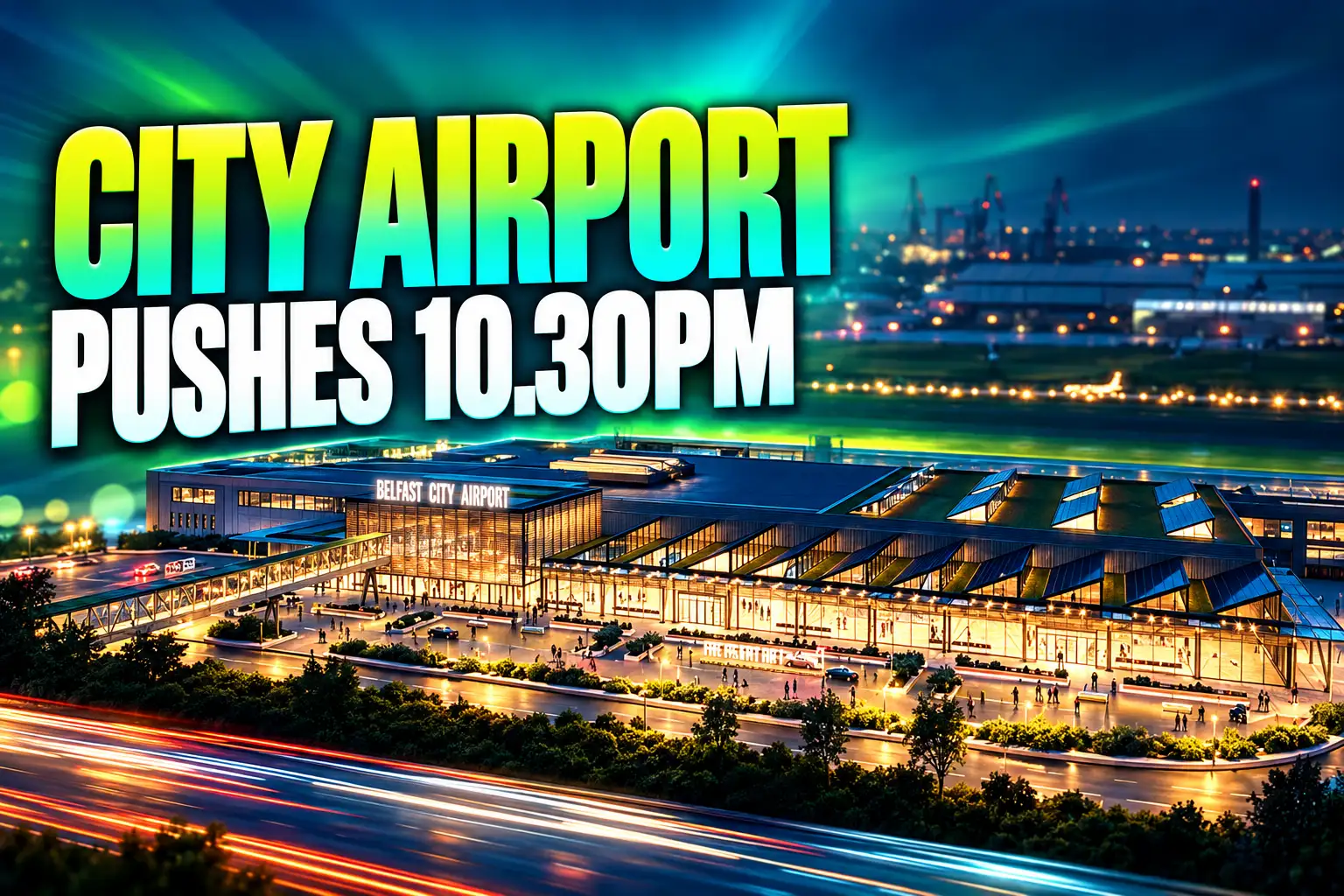
Belfast City Airport Pushes 10.30pm Flights Toward 7 Million
Belfast City Airport’s £200m plan needs 10.30pm flights and a higher movement cap to chase 7 million passengers by 2040.

Belfast City Airport has asked to schedule flights until 10.30pm and to lift its annual movement cap from 48,000 to 61,000. That filing went to two councils in late August, bundled with a £200 million ($273 million) rebuild that adds a hotel, more aircraft stands and space for a rail halt. Chief executive Matthew Hall said the extra hour and the higher cap are “critical” if the harbour airport is to reach 7 million passengers a year by 2040, and the runway would stay at about 6,000 feet.
The buildings make the better photograph. The product change for travellers is the clock, because a 9.30pm close is what keeps this airport a UK domestic machine with one foot in Europe.
The Extra Hour Airlines Need for European Rotations
Hall put the hours change and the movement cap in the same sentence as future routes. Extended hours, he said, would give airlines the “operational flexibility required to facilitate airline schedules and future route development.” On a 15-hour day that ends at 9.30pm, a jet that has already flown a London or Amsterdam turn has little room left for a second inbound that lands in Belfast after a delay. Push scheduled flying to 10.30pm and that second rotation starts to look like a timetable, not a favour.
The proposed changes would provide the operational flexibility required to facilitate airline schedules and future route development, while continuing to operate within a framework that recognises the importance of balancing growth with our commitment to being a responsible neighbour.
Matthew Hall, Chief Executive, Belfast City Airport
The airport, owned by a fund managed by private equity firm 3i, filed proposal of application notices with Belfast City Council and Ards and North Down Borough Council. Those notices start consultation on outline and full planning applications for the physical works. A separate, voluntary consultation will cover changes to the Planning Agreement, which is held by the Department for Infrastructure. The hours and the cap live in that agreement, not in the terminal drawings.
We’ve taken an important next step in realising our Master Plan 2040 vision, submitting Proposal of Application Notices (PANs) to Belfast City Council and Ards and North Down Borough Council ✈️
Find out more: https://t.co/FFdXT8nWug pic.twitter.com/WQJCF0Oxvd
— Belfast City Airport (@BELFASTCITY_AIR) August 25, 2026
OAG schedules data for summer 2026 show about 951,900 departure seats, up 15 percent on 828,000 a year earlier. UK routes still account for more than 95 percent of that capacity. Aer Lingus Regional is the largest operator, with 362,100 departure seats, 38 percent of the total and up 17.7 percent year on year. easyJet has grown faster still, up 39.5 percent to 294,900 seats. British Airways holds 25.4 percent but has cut its offer by 5.2 percent, to 242,100. KLM has 3.9 percent and Loganair 1.7 percent. Across both Belfast airports, summer departure seats total 3.5 million, and City’s share is 26.9 percent.
That mix is why an extra hour is worth more here than another 200 metres of tarmac. The short runway already handles the A319 and A320 family that fly this network. What it cannot do, with a 9.30pm close, is give those aircraft a full working day that still ends in east Belfast.
City Still Handles Fewer Passengers Than It Did in 2019
The airport’s own figures put 2025 traffic at just over 2.36 million passengers. CAA totals for the year sit at about 2.364 million, which is 3.7 percent below the 2.455 million recorded in 2019. Belfast International handled about 6.677 million in 2025. City is still the smaller Belfast airport, and it has not got its pre-pandemic passengers back.
The first quarter of 2026 was kinder. CAA figures show 572,071 passengers through City, up 5.6 percent on a year earlier, while International rose 1.3 percent to 1,381,079. Aer Lingus Regional has put 750,000 seats on sale for the summer, and easyJet has kept adding UK frequencies, including a winter service to Southend. The recovery is real. It is also a long way from 7 million.
BELFAST TRAFFIC AGAINST THE 2040 ASK
| Airport or flow | Latest year | Passengers | Where that sits |
|---|---|---|---|
| Belfast City | 2019 | 2.455 million | Pre-pandemic high |
| Belfast City | 2025 | 2.36 million | Still short of 2019 |
| Belfast International | 2025 | 6.677 million | The larger Belfast airport |
| Dublin, NI share | 2024 | about 1.4 million | DAA has put the NI share at 4 percent of 34.6 million |
| Belfast City target | 2040 | 7 million | Master Plan 2040 |
Dublin Airport has said about 4 percent of its passengers come from Northern Ireland. On 34.6 million people in 2024, that is about 1.4 million travellers, more than half of City’s entire year. The Master Plan is explicit about trying to keep more of that demand in Northern Ireland rather than on the M1. Hall has also said passenger demand across the island of Ireland is set to double to 90 million, and the plan forecasts that Northern Ireland’s airports will need to handle up to 21 million a year within 15 years, with City taking 7 million of that.
Gerry Lennon, chief executive of Visit Belfast, backed the vision on the airport’s own site, tying air links to the visitor economy. Invest NI chief executive Kieran Donoghue called the airport a gateway for investment and exports. Those letters sit beside a harder fact: without new evening metal, City remains a Heathrow, Gatwick, Manchester and Birmingham airport with a KLM spoke attached.
61,000 Flights a Year, Same 6,000-Foot Runway
The Planning Agreement now allows 48,000 air traffic movements in 12 months. The airport wants that raised by 27 percent, to 61,000. It says the extra movements can stay inside the existing noise contour if airlines keep moving onto quieter new-generation types. Hall has repeated that the draft works “do not include any extension to the existing runway.”
They do not need a longer runway for today’s flying. Airport performance figures show 28,643 movements in 2025, against 30,369 in 2024. That is well under the 48,000 cap. The higher ceiling is a 2040 number. The extra hour is the change airlines can use as soon as Stormont rewrites the agreement.
THE CONTROLS THE AIRPORT WANTS REWRITTEN
- Scheduled close: 9.30pm today, 10.30pm under the ask, a 15-hour day going to 16 hours.
- Movement cap: 48,000 a year today, 61,000 in the proposal.
- Night stop: no scheduled flying through the small hours; the airport says it would keep a no-fly window from midnight to 6.29am, and consultation material said nothing would operate between 23:59 and 06:30.
- Runway: about 6,000 feet, 1,829 metres, unchanged.
Delayed aircraft already leak past 9.30pm under “exceptional circumstances.” The airport’s April 2026 log recorded 26 such movements that month, 24 of them arrivals. A scheduled 10.30pm finish would turn some of those leaks into planned slots. It would also put more flights into the hour neighbours have spent two decades treating as the start of the night.
Holywood Has Heard This Bid Before
The curfew is not a courtesy. Under the Planning Agreement, flights may only be scheduled between 06.30 and 21.30. Between 21:31 and 23:59, arrivals and departures are meant to be delayed flights only, and only in exceptional cases, with each extension logged for the Department for Infrastructure. No scheduled flights are allowed between 21:31 and 06:29. Fines on late movements go into a community fund.
Belfast City Airport Watch, which speaks for nearby residents, has already said it will object. The group is “concerned about the potential impact of additional aircraft noise and sleep disturbance,” and it wants a full public inquiry. It argues that approval would “overturn important protections” in the 2019 Planning Agreement.
BCAW believes changes of this scale should not be determined without a comprehensive and independent examination of their wider consequences. It is about striking the right balance between aviation growth and the health, environment and quality of life of the large number of people who live around Belfast City Airport.
Spokesperson, Belfast City Airport Watch
The noisiest nights are not always the latest ones. On a southerly runway, climb-out already goes over East Belfast and Stranmillis at low level. Traffic to International tends to cross the lough higher up. An extra scheduled hour on those wind days is a different night from an extra hour when arrivals and departures stay over the water, which the airport still tries to use for a majority of flights.
HOW THE CURFEW GOT THIS HARD TO MOVE
- 1997: A planning agreement sets scheduled flying at 6.30am to 9.30pm, with later movements only in exceptional cases.
- July 2004: After months of talks, the airport drops a bid for late-night flying. Then chief executive Brian Ambrose said operating hours were the most contentious issue in the consultation.
- 2008: The combined commercial and general aviation cap is set at 48,000 movements a year.
- February 2018: The Northern Ireland Public Services Ombudsman finds 3,073 flights between 21:31 and 23:59 from 2008 into early 2016, and maladministration by the Department for Infrastructure in how the late-flight rule was enforced.
- 2019: A revised Planning Agreement keeps the 9.30pm scheduled close and the 48,000 cap.
- 16 September to 11 November 2025: Eight-week consultation on the draft Master Plan draws 376 responses. The airport says 72 percent of public respondents backed the overall vision and 95 percent of surveyed passengers did; hours and movements were the main local worry, especially at the Holywood event.
- 20 to 25 August 2026: A Translink memorandum of understanding is signed, then the proposal of application notices go in, with the hours and cap to follow as a Planning Agreement rewrite.
They asked for later flying once and walked away. This time the extra hour is wrapped in a 15-year master plan, a hotel and a rail halt, and sent to two councils plus a minister.
What a 10.30pm Finish Would Change for Travellers
A 10.30pm scheduled close would let inbound UK and European aircraft land after a delayed first wave and still count as a normal arrival, rather than an exceptional extension. That is the practical difference for anyone trying to leave London, Manchester or Amsterdam after a full working day and still get into Belfast without diverting to Aldergrove or overnighting in Britain. It is also the difference between a day-return business pattern that dies at 9.30pm and one that can stand a late Heathrow slot.
The airport says it would still not schedule anything after 10.30pm, and it would keep the small-hours stop. Consultation staff told Holywood residents that flights would not run on to 23:59 as a matter of course, and that nothing, scheduled or delayed, would operate between 23:59 and 06:30. That is a narrower ask than a true night regime. It is still a rewrite of the rule that has defined this airport since 1997.
For route planners, the hour is the difference between adding another UK shuttle and trying a second daily European turn. City’s summer 2026 network is still more than 95 percent domestic. easyJet’s growth and Aer Lingus Regional’s 750,000-seat summer sale deepen that UK grid. They do not, on their own, build the European bank the 7 million figure implies. Hall’s “future route development” line only works if the last inbound of the day is allowed to be last.
Terminal Space, 21 Stands and a Hotel on Site
The physical plan is the public face of growth to 7 million passengers over 15 years. It is also, the airport argues, how you handle that traffic on the same runway, with a shift toward buses, trains and fewer private cars. The draft works in the notices and the published Master Plan 2040 include a hotel and extra parking, and they also talk about capping parking levels so more people arrive by public transport. Both can be true if the extra spaces replace a messy forecourt rather than doubling the car park.
WHAT THE £200 MILLION IS MEANT TO BUY
- Terminal and pier: An extension of the existing terminal, upgraded security and baggage, and a new two-storey pier.
- Airfield: Aircraft stands rising to 21, with more apron and new taxiways, and no extra runway.
- Forecourt: A redesigned multi-modal front door for buses, taxis, cyclists and pedestrians, plus extra parking and more electric-vehicle charging.
- Hotel: Complementary on-site development that could include a hotel, with no operator named yet.
- Jobs: The airport says the plan could double the on-site workforce to more than 2,200, add over 1,100 jobs on the campus, support more than 23,000 jobs across Northern Ireland and contribute £1.7 billion a year to the regional economy.
A 2024 sustainability strategy sits underneath the same drawings. The airport wants net-zero operations by 2040, ten years earlier than its previous goal, with more on-site renewables and a path for sustainable aviation fuel in line with UK mandates. Quieter aircraft are also the answer it gives when residents ask how 61,000 movements can fit the current noise contour. That claim will be tested in the Planning Agreement consultation, not in a CGI of the pier.
Translink Signs Up to Study a Direct Rail Link
On 20 August the airport and Translink signed a memorandum of understanding to appraise better rail access. The Master Plan sketches a new halt on the Belfast to Bangor line, tied to the extended terminal by a pedestrian bridge across the Sydenham Bypass. If it is built, Belfast City would be the first airport on the island of Ireland with a rail halt at the terminal. No option has been chosen, and Translink still has to take a strategic outline case to the Department for Infrastructure, with a submission spoken of for autumn 2026.
Translink’s own planning papers already name a new halt at Belfast City Airport among future options, alongside other new stops on the network. Group chief executive Gerard Carlin said the partnership could improve safety, access and connections between the rail network and the airport. Infrastructure Minister Liz Kimmins welcomed the memorandum and pointed to the All-Island Strategic Rail Review, which noted that no major airport on the island is served by rail. Translink is also studying a link to Belfast International via the Antrim to Lisburn line, so City’s halt is not the only airport rail idea in the file.
Sydenham station already sits near the airfield, with a shuttle for anyone who asks. A dedicated halt with a bridge is a different offer, and rail campaigners have treated it as a piece of a wider Belfast circle rather than a passenger-only spur. The notices only safeguard the pedestrian link. The trains still need money, a case, and Translink to run them.
Two Councils and a Minister Must Still Say Yes
The rebuild goes to Belfast City Council and Ards and North Down Borough Council, because the airfield sits on the edge of both. Subject to the coming consultation, planning applications are likely later this year. The hours and the 61,000 cap go to the Department for Infrastructure as changes to the Planning Agreement, and the final call is expected to rest with the infrastructure minister. BCAW wants that call made only after a public inquiry.
First Minister Michelle O’Neill and deputy First Minister Emma Little-Pengelly met airport representatives in February and welcomed progress on connectivity, jobs and tourism. That is not a planning decision. The 9.30pm close is still in the agreement, the movement cap is still 48,000, and the 7 million figure is still a target in a master plan. Community events are due in the coming weeks, then the paper goes to the two halls and to Stormont.
Until the minister rewrites the clock, the last scheduled arrival remains 9.30pm, and the extra hour that would make 7 million look like a timetable stays a line in a consultation pack.

Marriott Stakes the JW Name on a Converted Guanacaste Resort

Alaska Stakes Aurora Suites on an Uncertified 737-10

Leeds Bradford Strike Puts Aena Between Two Airports

United Bets on Flagstaff Again With Denver Flights

UK eGates Start Letting British Passengers Skip the Passport Scan

Flight Cancellations Rise While the FAA Shrinks Staffing Targets

United Folds Newark’s Lima Nonstop Into Its Houston Hub

Hitachi’s Aurora Faults Drove the EMR Bank Holiday Strike

Airbnb’s 6% Direct Links Undercut the Host Website Pitch

Grand Canyon Hotels Close After a Repeat Pipe Flood
-
 AIRLINES2 months ago
Flight Cancellations Rise While the FAA Shrinks Staffing Targets
-
 AIRLINES1 month ago
United Folds Newark’s Lima Nonstop Into Its Houston Hub
-
 NEWS1 month ago
Hitachi’s Aurora Faults Drove the EMR Bank Holiday Strike
-
 HOTELS1 month ago
Airbnb’s 6% Direct Links Undercut the Host Website Pitch
-
 HOTELS1 month ago
Grand Canyon Hotels Close After a Repeat Pipe Flood
-

 AIRLINES2 months ago
United Bets the A321XLR on 10 New International Cities
-

 NEWS1 month ago
Extra Months on Old UK Passports Still Block EU Entry
-
 NEWS1 month ago
The EU Pulled the 2026 ETIAS Date After Border Chaos