
AIRLINES
United’s Fuel Recovery Lag Leaves More Fare Hikes Ahead
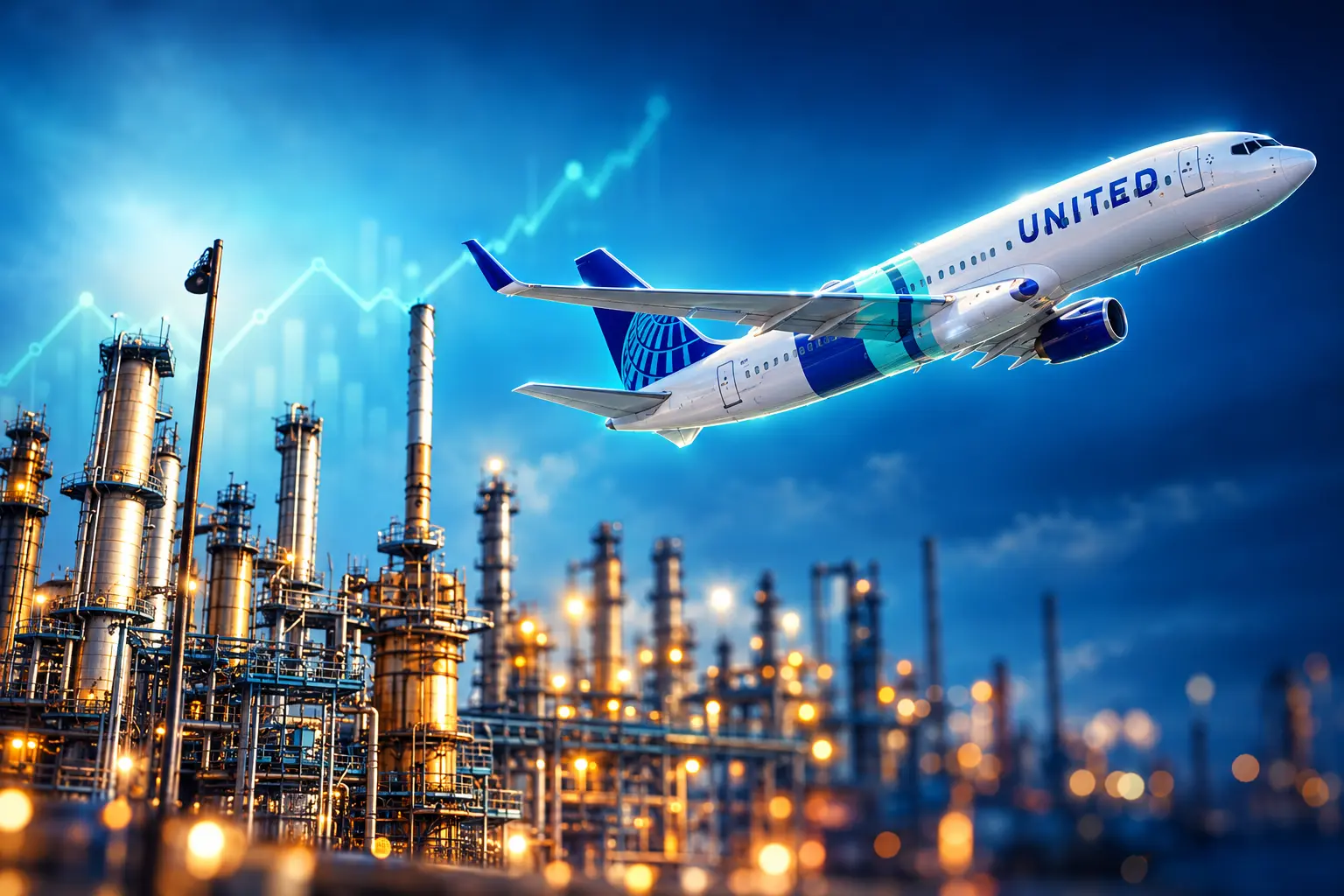
United recaptured 72% of a $1.8 billion fuel spike, then guided Q4 at $4.80 a gallon, so the leftover bill is still heading into fares.

United Airlines recaptured 72% of a $1.8 billion jump in jet fuel costs in the third quarter and now expects a similar gap in the fourth. Chief financial officer Michael Leskinen told analysts the miss was timing. Most of the quarter’s tickets were already sold when prices jumped again.
That leftover slice, roughly $500 million in the July-September quarter, is not a discount. Chief commercial officer Andrew Nocella said new selling yields have been running in the very high teens, some weeks north of 20%, and leisure load factor fell 1.3 points. The fare catch-up is still open.
United Recaptured 72% of a $1.8 Billion Fuel Spike
United on October 20 posted record $17.9 billion in quarterly revenue, up 17.4% from a year earlier, on capacity that rose only 1.3%. Total revenue per available seat mile was 20.19 cents, up 15.9%, the best quarterly unit-revenue gain since the pandemic. Yields rose 17%.
Adjusted diluted earnings were $2.54 a share, inside guidance. The adjusted pre-tax margin was 6.2% on $1.1 billion. On a GAAP basis, pre-tax earnings were $1.3 billion, a 7.3% margin, and diluted earnings were $3.14 a share. Net income was $1.0 billion, or $833 million on an adjusted basis. The airline carried a record 49.5 million customers.
Fuel is what ate the rest. United’s $4.843 billion third-quarter fuel bill was 62% higher than a year earlier, a $1.8 billion increase, on 1,243 million gallons at an average $3.90 a gallon. Leskinen said the carrier recaptured 72% of that increase. Over the summer it had guided to 80% to 90%. In the second quarter the recapture rate was about 50%.
Q3 RESULTS VERSUS THE Q4 GUIDE
| Metric | Q3 2026 | Q4 2026 guide |
|---|---|---|
| Average / assumed fuel | $3.90 a gallon | about $4.80 a gallon, all-in |
| Share of higher fuel recaptured | 72% | similar to Q3 |
| Adjusted EPS | $2.54 | $0.50 to $1.50 |
| Revenue growth | 17.4% | more than 20% |
Cost per seat mile excluding fuel rose 7.8% to 13.09 cents, which United tied to the full run rate of its flight-attendant deal and to capacity it had already cut. The airline still made money. The 72% figure is the share of a $1.8 billion cost shock that made it into revenue before the quarter closed, not a cap on what later tickets can carry.
The Rest of the Bill Is Still in New Tickets
Leskinen put the mechanism in one sentence on the October 21 call. The late-quarter spike hit after the booking curve had already done most of its work, so the airline could not reprice seats that were already on the calendar.
We recaptured 72% of the increase in fuel expense, as much of the increase versus our guidance occurred in the period and most of our revenue was already on the books.
Michael Leskinen, chief financial officer, United Airlines Q3 2026 earnings call
He has used that lag language before. At a Morgan Stanley conference on September 16, with about 35% of fourth-quarter tickets already sold, he still expected to recover 100% of higher fuel costs by year-end and warned models to bake in delay, not defeat. After the October print, United dropped that year-end 100% target. It now expects a recapture rate in the fourth quarter similar to the 72% in the third. Leskinen still said the company is highly confident it can recapture 100% of fuel-cost increases, but with a lag. Nocella said United expects to close the gap next year.
HOW THE 100% TARGET SLIPPED
- September 16, 2026: Leskinen still aims to recover 100% of higher fuel costs by year-end, with about 35% of fourth-quarter tickets already booked.
- October 20, 2026: United reports the $1.8 billion fuel increase and a 72% recapture rate, short of the 80% to 90% it had guided.
- October 21, 2026: On the earnings call, United guides fourth-quarter adjusted EPS to $0.50 to $1.50 at about $4.80 a gallon and a recapture rate similar to the third quarter.
- October 27, 2026: The industry jet-fuel print is still sitting close to that fourth-quarter assumption.
Anyone who bought a fall ticket in August locked a price that did not know about the late spike. Anyone buying now is in a different market. Nocella said United still needs to recapture more of today’s fuel bill, and that RASM and yields should rise from the third quarter to the fourth. The delayed 28% is a queue of future tickets, not a rebate.
Why United’s Q4 Guide Assumes $4.80 Fuel
United’s $3.90 third-quarter average is an all-in cost, into-plane, across a quarter that started cheaper and finished much hotter. Spot markets kept climbing after the quarter closed. The U.S. Energy Information Administration’s Gulf Coast spot price of $4.632 a gallon on October 20 was 121.3% above the $2.093 print a year earlier. Airlines for America showed the Argus US Jet Fuel Index at $4.66 on October 27, a simple average of Chicago, Houston, Los Angeles, and New York.
THREE FUEL NUMBERS IN ONE MONTH
- United Q3 average: $3.90 a gallon, all-in, across July through September.
- Gulf Coast spot, October 20: $4.632 a gallon, more than double the year-earlier EIA print.
- Q4 planning price: about $4.80 a gallon, all-in, from the forward curve as of Friday, October 16.
The $4.80 figure is not a spot quote. It is United’s all-in planning price, which sits above wholesale because it includes into-plane fees. Leskinen set the $0.50 to $1.50 EPS range off that curve. United also said fourth-quarter operating revenue should rise more than 20% and set another record, with unit revenue accelerating and non-fuel unit costs slowing. The guide can look soft next to Wall Street’s old numbers and still assume that new tickets keep taking price.
Jet fuel began that climb after fighting in Iran started in February. CEO Scott Kirby told the call United is planning for, and actually expects, fuel to remain elevated for all of 2027. He is not using cheaper oil as a planning crutch. On a separate interview he put the company’s year-over-year fuel shock at $8 billion and said it is expensive to fly airplanes, so the airline has to charge enough to cover the cost of flying. Passengers already hear that as a price story. The earnings math says the price story is incomplete: 72% is in, and the rest is still being sold.
Leisure Cabins Absorbed a 1.3-Point Load-Factor Cut
Demand under the fuel bill did not roll over. Premium revenue rose 17%. Basic Economy revenue rose 16%. Loyalty revenue rose 17%. Cargo rose 23%. Contracted business revenue rose 26%. Economy-cabin unit revenue was up 17% for a third straight quarter. Business revenue rose 22%. Leisure revenue rose 16%, with stronger year-over-year yield gains than business traffic.
The give showed up as empty seats, not as a fare cut. Nocella said passenger load factor fell modestly overall. Leisure load factor fell 1.3 points, which he called a small amount of elasticity given higher ticket prices, and a trade United would make every day. He said the airline manages to unit revenue and margin rather than a fixed load-factor target, and that recovering the rest of the fuel bill likely means slightly lower load factors. Premium cabins went the other way: premium capacity was up 2.5%, and business load factor rose almost a point.
Florida is the cleanest picture of how fast a market can reprice. Nocella said Florida RASMs were up 26% in the quarter, with Central America, the Caribbean, Newark, and London as other tailwinds. Hawaii, the South Pacific, and Chicago lagged. He also said fares had lagged the rest of inflation for years, which is why consumers and businesses have been accepting the increases. That is a United view, not a promise that the acceptance lasts forever. It is the reason a 1.3-point leisure hole can sit next to 17% yields without a demand crash.
The product roadmap fits the same trade. RelaxRow, due in 2027, leaves the middle seat empty in Economy Plus. That is another way to sell fewer cheap middles while asking more for the seats that remain. Starlink is already on more than 640 aircraft, about half of departures, with a target of 61% by the end of 2026, 87% by June 1, and the full fleet by the end of 2027. Kirby wants that Wi-Fi to steal loyal customers from other airlines. For a traveler, it is a reason to pick one metal over another. It is not a reason to expect a cheaper seat.
Kirby Is Planning for High Fuel Through 2027
Kirby’s 2027 script is blunt. United still wants double-digit pre-tax margins. He expects fuel to stay high for the whole year and says industry capacity looks set to accelerate. He will not assume the opposite. To get to those margins in that world, he said United probably also needs at least one of three things: lower fuel, lower industry capacity, or a continued willingness across the industry to trade load factor for yield. He has been, in his words, pleasantly surprised by the industry’s ability this year to raise yields and pass through much of the fuel increase. He is not going to budget for that surprise to repeat on command. Hope, he said, is not a strategy.
The controllable plan is share shift: Starlink, cabins, clubs, and a bigger international map. United is capped at 600 daily flights at Chicago O’Hare under the FAA’s capacity screen, a limit Nocella thinks may last well into 2028, and it took 50% of Chicago passenger revenue in the second quarter for the first time. Those are moat details. They do not lower the fuel price. They are how United thinks it can stay profitable if the fuel price does not come down.
He also pointed at costs that used to separate network carriers from discounters. Airport fees at United’s hubs are 60% higher than before the pandemic, he said, and cost harmonization has eaten the edge budget carriers once held. Maintenance and engines moved the same way. In that telling, a low-cost airline flying into an expensive hub is no longer a low-cost airline. He said 6 to 10 U.S. airlines are going to lose money this year, and that pricing has to rise for them to survive. Supply changes, in his view, follow.
Budget Carriers Lost the Cost Gap That Capped Fares
That supply change already has a tombstone. Spirit Airlines ceased operations on May 2 after jet fuel blew through the $2.24-a-gallon assumption in its restructuring plan. Rivals filled some of the holes. They did not fill the cheap-seat map. Nationwide budget-airline flights scheduled for November sit at 40,470, down 16% from 47,980 a year earlier. Of Spirit’s 194 former routes, 70 now have no budget carrier at all, only a mix of United, American, Delta, Alaska, JetBlue, or Southwest. Eight have no nonstop.
WHAT DROPPED OUT OF THE CHEAP-SEAT MAP
- Spirit’s last day: May 2, 2026, after fuel ran far above the $2.24 a gallon its plan had used.
- November schedules: 40,470 budget flights, 16% below November 2025.
- Unreplaced routes: 70 of Spirit’s 194 markets now have no ultra-low-cost nonstop.
- United’s own trade: 17% higher yields and a 1.3-point leisure load-factor cut, with more recapture still to come.
Frontier took more of Spirit’s old customers than its size would imply and still lost money in the second quarter with fuel at $4.17 a gallon. Other large carriers have been making the same yield-over-volume bet, including Southwest’s struggle with $4.55 fuel. When the airline that used to set the floor on a leisure route is gone, the remaining schedule does not have to match the old sale fare. United did not need Spirit to fail in order to raise yields 17%. The failure still removes the competitor that used to punish a carrier for trying.
Nocella said United will keep selling the seat it can margin, not the seat it can fill. Kirby is planning as if $4-plus fuel lasts through 2027 and as if several U.S. airlines stay in the red until capacity comes out. For a traveler, the delayed 28% of United’s third-quarter fuel bill is the near-term piece of that. The ticket that was already bought escaped the last spike. The next one is being priced as if the spike is the new floor.

Emirates Is Betting Hedges Will Outlast the Iran War

Booking.com Warns Costly Flights Are Slowing Holiday Demand

KLM Moves 5,000 Roles and Shrinks Its European Fleet

The FCDO’s 16-Country Alert Is Aimed at Hub Flyers

Dubai Hotels Wait as European Airlines Skip Winter

Flight Cancellations Rise While the FAA Shrinks Staffing Targets

United Folds Newark’s Lima Nonstop Into Its Houston Hub

Airbnb’s 6% Direct Links Undercut the Host Website Pitch

United Bets the A321XLR on 10 New International Cities

Hitachi’s Aurora Faults Drove the EMR Bank Holiday Strike
-
 AIRLINES3 months ago
Flight Cancellations Rise While the FAA Shrinks Staffing Targets
-
 AIRLINES3 months ago
United Folds Newark’s Lima Nonstop Into Its Houston Hub
-
 HOTELS3 months ago
Airbnb’s 6% Direct Links Undercut the Host Website Pitch
-
 AIRLINES3 months ago
United Bets the A321XLR on 10 New International Cities
-
 NEWS3 months ago
Hitachi’s Aurora Faults Drove the EMR Bank Holiday Strike
-

 HOTELS3 months ago
Grand Canyon Hotels Close After a Repeat Pipe Flood
-
 NEWS3 months ago
The EU Pulled the 2026 ETIAS Date After Border Chaos
-

 NEWS2 months ago
Brussels Closed the EES Pause as Kiosks Keep Failing