
AIRLINES
Ryanair’s Oil Warning Makes Passengers Pay First
O’Leary’s 15 to 20 percent summer 2027 fare warning hits passengers while Ryanair remains mostly hedged, adds Warsaw jets, and waits for weaker airlines to crack.

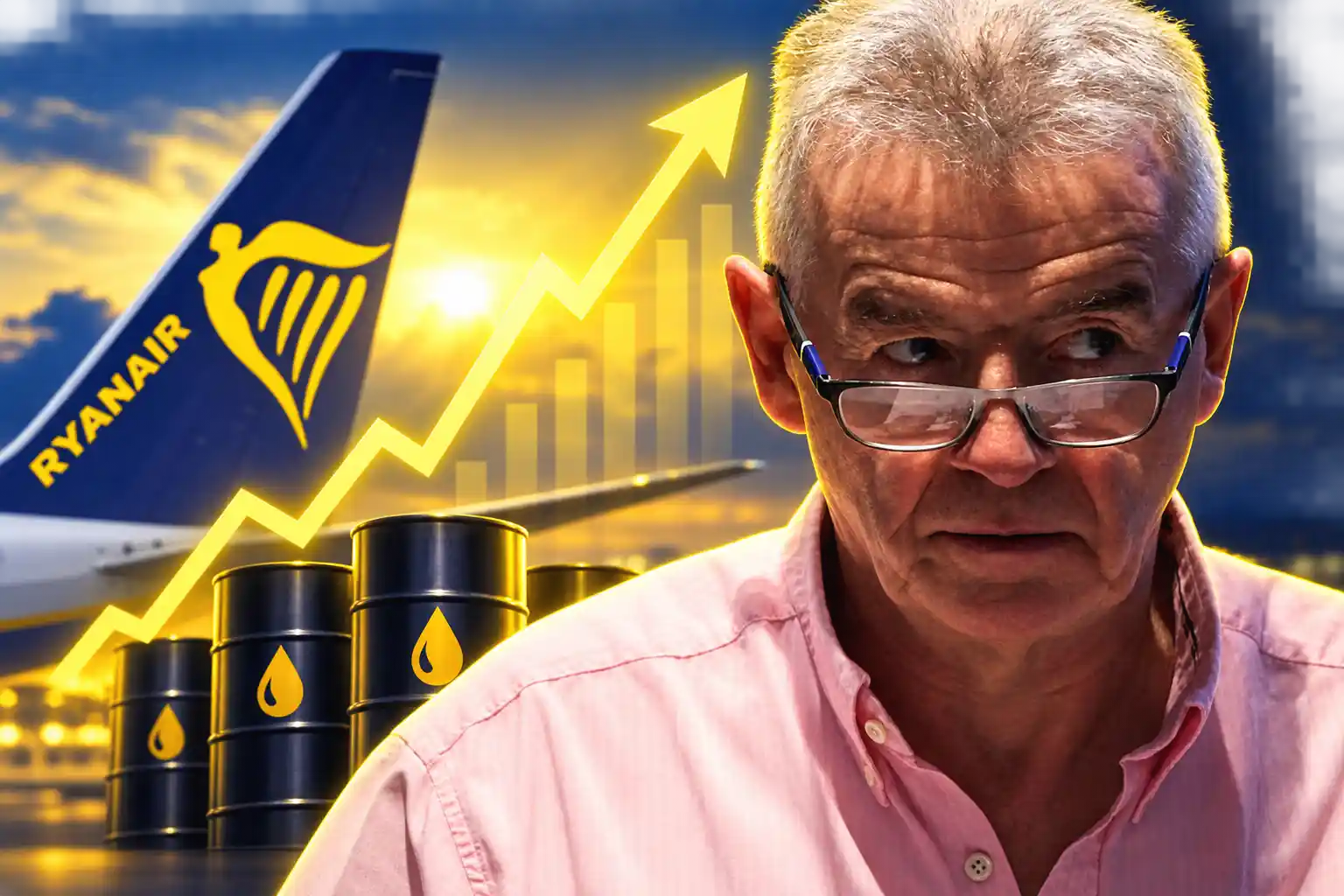
Ryanair Group CEO Michael O’Leary said summer 2027 airfares will rise 15 to 20 percent if oil stays at current levels. He said it in Warsaw on Sept. 29, on a day the airline also put more jets into Poland.
Demand is still strong, he said, and cheap tickets are part of why. That bargain, he argued, cannot hold if jet fuel does not come down before the lightly hedged year that includes next summer.
Cheap European Fares Meet a High Oil Bill
O’Leary was in Warsaw to talk growth, Boeing, and a new winter schedule. The line that travels is the fare one. Low fares kept people flying through a messy year, he told reporters, but airlines cannot keep selling that way on this oil.
He still sounded upbeat about the desire to travel. The near-term list is political and military, not just the fuel desk. “We’re optimistic for the future, but there’s lots of short-term challenges, most notably what will happen with (Donald) Trump and the Republicans in the midterm elections in November,” he said. He wants the war in Ukraine settled, and the war in the Middle East settled. “We’d like everybody to get back to peace, love and air travel.”
Peace would help the fuel bill. Until it arrives, the people who buy July and August 2027 seats are the ones he is preparing to charge more. Ryanair will not add a fuel surcharge, he has said. The rise would be baked into the ticket.
Eighty Percent of This Year’s Fuel Is Already Bought
The warning is not because Ryanair is naked on oil this winter. In its July 20 results the group said it had 80 percent of FY27 jet fuel hedged at about $67 a barrel through March 2027. Fiscal 2028, which includes summer 2027, was only 15 percent covered, at about $85. O’Leary said in London on Sept. 23 that the airline would look to lift that cover before half-year numbers in November.
FY27 FUEL COVER VERSUS FY28
| Period | Share already bought | Price locked in | What it actually covers |
|---|---|---|---|
| FY27, to March 2027 | 80 percent | About $67 a barrel | Most flying through winter 2026-27 |
| FY28, from April 2027 | 15 percent | About $85 a barrel | Summer 2027, still mostly open |
The 20 percent that was not hedged already hurt. In the quarter to June 2026 that slice doubled to $150 a barrel, profit after tax fell 34 percent to €538 million from €820 million, and average fares were down 6 percent as the Middle East conflict delayed bookings. Traffic still rose 6 percent, to 61.3 million. Revenue was €4.38 billion. Operating costs rose 11 percent to €3.81 billion.
That is the split the wire copy often skips. This financial year is largely bought. The summer 2027 problem sits in the year that is not.
O’Leary Would Rather Watch Rivals Fail
He is not only asking oil to fall. In London on Sept. 23 he said he hoped jet fuel would climb faster into the next year, because that would push other airlines over the edge. Ryanair, he said, is already talking to airports that fear more failures will pull capacity out.
I very much hope that jet fuel prices will rise faster into next year because that will accelerate the extent to which other airlines will fail.
Michael O’Leary, Ryanair Group CEO, to reporters in London, Sept. 23, 2026
He also drew a brand line the legacy groups will not like. “Ryanair will not levy a fuel surcharge, but the legacy guys certainly will next summer,” he said. Chief marketing officer Dara Brady, speaking in Liverpool on Sept. 24, said supply worried him less than price, and that if jet fuel stayed around $140 a barrel some European airlines would struggle to keep flying.
Passengers still pay. Rivals with thinner hedges shrink or vanish. Ryanair keeps the “no surcharge” slogan and, if the failures come, a larger share of the seats that remain. That is the trade inside the 15 to 20 percent warning.
Why Ryanair Is Cutting Winter Seats
On Sept. 2 the group cut its FY27 traffic target from 216 million passengers to 214 million, a reduction of 2 million, to limit flying on expensive unhedged fuel in the weak season. O’Leary told reporters in London that weaker winter flights were being trimmed because those costs are harder to recover in fares. Winter traffic is now meant to be broadly flat, against an earlier plan for second-half growth of about 2 percent.
THE $80 TO $100 FARE MATH
- The extra bill: O’Leary said the fuel bill could rise by €1.5 billion ($1.7 billion) if average fuel cost went from about $80 to $100 a barrel.
- Per passenger: Spread across about 220 million passengers in FY28, he put that at roughly €7 more each.
- On a €50 fare: He called that a 12 to 14 percent increase, a separate recovery sum from the 15 to 20 percent summer 2027 warning.
- This year’s oil line: He put the current-year oil bill at about €6 billion, which is the base that $80-to-$100 step would lift by a quarter.
Summer 2027 capacity is still planned to rise 2 to 3 percent once 15 Boeing MAX 10s arrive, taking traffic toward about 220 million in FY28. The winter cut is the safety valve for the unhedged slice. The summer fare talk is how he plans to get the money back when the $67 hedge expires.
Bookings are still closer-in than last year, which is another reason winter looks messy. Other passenger delays have not gone away since the EES safety valve shut, so late demand sits beside fuel as a second reason not to fly empty seats through January.
Q1 already showed the other side of that coin. Fares had to be stimulated even while unhedged fuel doubled. The 2027 warning assumes the market will take a hike that 2026 would not. People who price the same January trip a year apart are already seeing 2027 come in dearer, which is why the warning lands on ground that has started to move.
Warsaw Still Gets Nine Based Aircraft
The same Warsaw appearance that carried the fare line also added metal. Ryanair will station three new aircraft based at Modlin for the 2026 winter season, taking the based fleet to nine. O’Leary called it an extra $300 million on top of a Mazowsze fleet outlay he put at $900 million, aimed at doubling Modlin traffic to 3.2 million passengers a year.
WHAT WARSAW IS GETTING THIS WINTER
- Modlin fleet: Nine based aircraft and 30 routes, 11 of them new, including Birmingham, Bratislava, Bristol, Budapest, Copenhagen, Edinburgh, Manchester, Palma, Shannon, Stockholm, and Zagreb.
- Chopin: Sixteen winter routes, seven of them new (Bari, Bologna, Catania, Liverpool, Naples, Turin, Venice), with 800,000 passengers, up 50 percent.
- The combined map: Forty-six Warsaw routes, 18 of them new, plus extra frequency on seven Modlin routes including Dublin, Madrid, and Malta.
- The sale: One hundred thousand seats from 99 PLN, in a three-day promotion tied to the schedule.
“Due to the planned doubling of passenger traffic to 3.2 million, we have invested an additional $300 million in three new aircraft based at Modlin for the 2026 winter season,” O’Leary said. Ryanair calls itself Poland’s largest airline, with more than 24 million passengers a year across 13 Polish airports and more than 22,000 jobs in the country.
That is the local winner. Modlin gets the jets. Chopin gets more leisure routes into Italy and the UK. The people flying those 99 PLN seats this winter are not the people who will pay 15 to 20 percent more for summer 2027 if oil sits still. Growth is being steered toward airports and states that cut fees. High-cost markets, the July results said, lose frequency.
The MAX 10 Clock Has Not Been Reset
Capacity for that 2 to 3 percent summer 2027 lift still depends on Boeing. O’Leary said he still expects the first 15 MAX 10 aircraft in spring 2027. He hoped a fresh US certification delay would be “a matter of days, not weeks or months.” He also said he was happy with 29 Boeing aircraft delivered over the summer and saw “signs of real progress being made on quality and on production.” Ryanair is Boeing’s largest European customer.
The delay is real. On Sept. 28, Federal Aviation Administration head Bryan Bedford said the agency would hold off certifying the 737 MAX 10 until it is satisfied a newly flagged flight-management software issue is not a safety-of-flight problem. “We will be delaying the 10 until we’re satisfied that we don’t have an issue here,” Bedford told reporters at Reagan Washington National Airport. Boeing had told operators about a glitch that can drop vertical navigation during a specific missed approach, and it is writing a software fix.
THE FARE AND FLEET CALENDAR
- July 20, 2026: Ryanair reports Q1 profit down 34 percent and confirms the $67 hedge through March 2027, with only 15 percent of FY28 covered at $85.
- Sept. 2, 2026: FY27 traffic target cut from 216 million to 214 million to reduce unhedged winter flying.
- Sept. 23, 2026: In London, O’Leary rules out a fuel surcharge, hopes high jet fuel speeds rival failures, and sketches the €1.5 billion bill if fuel averages $100.
- Sept. 28, 2026: The FAA pauses MAX 10 certification over the flight-computer issue.
- Sept. 29, 2026: In Warsaw, O’Leary repeats the 15 to 20 percent summer 2027 fare warning, keeps the 15-jet spring plan, and adds three Modlin aircraft.
In July the group still talked of 300 of the jets by March 2034, with 20 percent more seats and 20 percent less fuel than the aircraft they replace. The current fleet is 647, including all 210 737-8200 Gamechangers. If the MAX 10 slips past spring, the 2 to 3 percent capacity rise is the first thing that breaks, and scarce seats make the fare warning easier to collect.
Ryanair Still Has to Pick an Engine Shop
Poland is not only a base story. The company said in Warsaw it is considering the country for a new engine shop, with a decision due by the end of 2026. That shop is one of two in-house engine plants Ryanair has been planning so it can bring CFM56 and LEAP-1B work off third-party lines. The July results said the first plant should be running in early 2029, with a second later.
Spain is in the same contest. The choice is still open. For Polish officials it is the industrial prize sitting behind the nine Modlin jets. For passengers it is a cost project, not a fare cut. In-house shops are meant to give Ryanair more control over turnaround time and, in time, a wider gap on maintenance cost. They do not change the $85 hedge that barely covers summer 2027.
O’Leary can keep selling 99 PLN winter seats from Warsaw because this year’s fuel is mostly bought at $67 and because he is pulling the flights that cannot recover a high unhedged price. He cannot sell summer 2027 on those terms unless oil falls or he covers more of FY28 than 15 percent. The losers are the households who need next July, and the weaker airlines that have to buy fuel as they go. The winners are the airports he is still stuffing with aircraft, and a carrier that will not put a surcharge on the website while it talks the base fare up.
Ryanair put 100,000 seats on sale from 99 PLN to mark the Warsaw schedule. Those tickets are the cheap edge of a year O’Leary is already repricing for summer 2027, unless oil comes down before the thin hedge year begins.

Ibiza Airport Flooded as Storm Adam Broke a 2005 Record

The Louvre Is Closed as France Runs Neighbourhood Curfews

UK Tells Travellers to Leave Saudi Arabia by Land

Southwest’s Record Fares Lose Ground to $4.55 Fuel

Leeds Bradford Airport Pauses Half-Term Strikes After Rejections

Flight Cancellations Rise While the FAA Shrinks Staffing Targets

United Folds Newark’s Lima Nonstop Into Its Houston Hub

Airbnb’s 6% Direct Links Undercut the Host Website Pitch

Hitachi’s Aurora Faults Drove the EMR Bank Holiday Strike

United Bets the A321XLR on 10 New International Cities
-
 AIRLINES2 months ago
Flight Cancellations Rise While the FAA Shrinks Staffing Targets
-
 AIRLINES2 months ago
United Folds Newark’s Lima Nonstop Into Its Houston Hub
-
 HOTELS2 months ago
Airbnb’s 6% Direct Links Undercut the Host Website Pitch
-
 NEWS2 months ago
Hitachi’s Aurora Faults Drove the EMR Bank Holiday Strike
-
 AIRLINES2 months ago
United Bets the A321XLR on 10 New International Cities
-

 HOTELS2 months ago
Grand Canyon Hotels Close After a Repeat Pipe Flood
-

 NEWS2 months ago
The EU Pulled the 2026 ETIAS Date After Border Chaos
-
 NEWS2 months ago
ATSB Opens Six Sydney Airport Ground Conflict Files